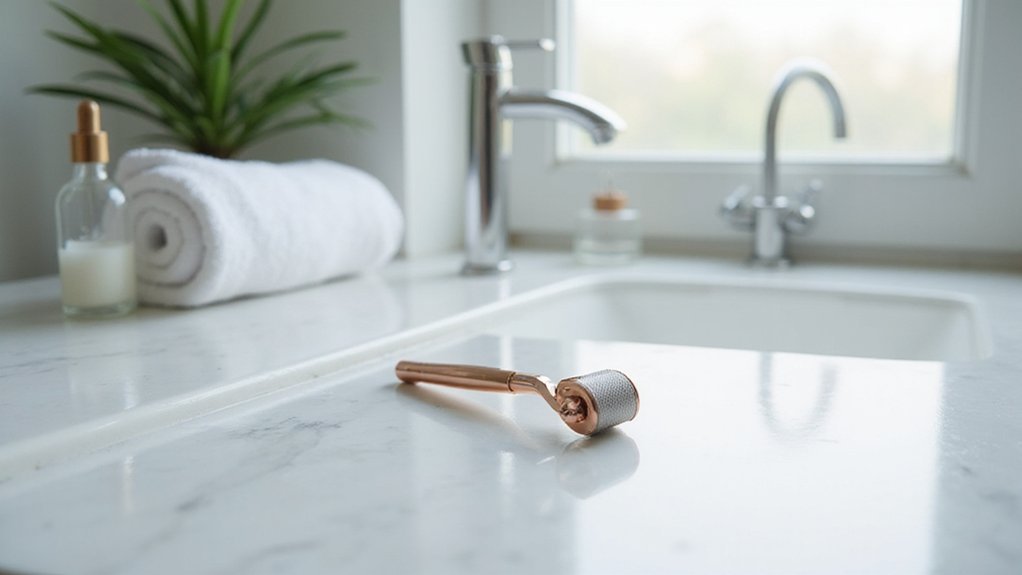
If you’ve ever wondered how to improve your skin’s firmness and smoothness, a derma roller might be worth exploring. This tool uses tiny needles to create small, controlled injuries that trigger your skin’s natural healing process, boosting collagen and elastin production.
The result can be tighter, more even skin, with reduced fine lines and scars.
By creating tiny channels on your skin’s surface, a derma roller also helps your serums penetrate deeper, making your skincare routine more effective.
With consistent use, you can see real improvements, though it requires patience.
Keep reading to discover everything you need to know about using a derma roller.
How Does a Derma Roller Trigger Your Skin’s Repair Process?
Because a derma roller creates tiny controlled punctures in your skin, it prompts your body to interpret these as minor wounds needing repair. This micro-injury signaling starts your skin’s natural regeneration process. Platelets respond by releasing growth factors like PDGF and TGF-β, which act as alarm signals for healing. Immune cells then arrive to clear away debris and activate signaling molecules that attract fibroblasts. These fibroblasts produce new collagen and elastin, which help to strengthen and tighten your skin’s structure. At the same time, your body fosters the growth of new capillaries, enhancing nutrient flow to the area. Over four to six weeks, this remodeling reorganizes collagen fibers, resulting in smoother, firmer skin. Rather than removing old skin, the derma roller stimulates new growth from within by activating your body’s innate repair system for long-lasting improvements. The process works by breaking down the parts of the roller and the sequence of steps during use.

TARGETS VISIBLE SIGNS OF FINE LINES & DARK SPOTS — This matched system pairs an advanced facial formula with a micro-channeling device so active ingredients bypass your outer barrier and absorb up to 20x more than topical application alone

Restore Youthful Skin – Boost collagen production and minimize fine lines, wrinkles, and acne scars with our 540 stainless steel roller for smoother, glowing skin.

For Home Use Only - Easy and Convenient to Use
What Skin Problems Can a Derma Roller Really Improve?
Derma rollers can effectively improve several common skin concerns with consistent use. You’ll notice smoother skin texture and softer fine lines after about 12 weeks because of increased collagen production. Hyperpigmentation, such as sunspots and melasma, can fade as your skin gradually remodels. Enlarged pores may become less prominent, and sebum production can appear reduced, giving your skin a tighter, clearer look. For optimal results, use tattoo needle types with the appropriate depth for your specific skin concern. Adjusting your treatment schedule based on needle length is essential for safe recovery and preventing overuse.
For stretch marks and certain scars, dermarolling promotes tissue remodeling, but it may not fully resolve postinflammatory erythema or redness. Combining dermarolling with chemical exfoliation can accelerate these results, but always remember to apply sun protection afterward since your skin becomes more sensitive and vulnerable. Staying consistent with your treatments will lead to noticeable, gradual improvements over time. To avoid irritation or infection, always sterilize your device thoroughly before each session.

🌿 3-Pack Value Set: Comes with three individual 0.25mm derma rollers, perfect for regular rotation or sharing with family members. Each roller is individually packaged for convenience and hygiene.

Our 0.25mm Derma Roller is very simple in using at home.
🌿 3-Pack Value Set: Comes with three individual 0.25mm derma rollers, perfect for regular rotation or sharing with family members. Each roller is individually packaged for convenience and hygiene.
Can a Derma Roller Fade Acne Scars at Home?
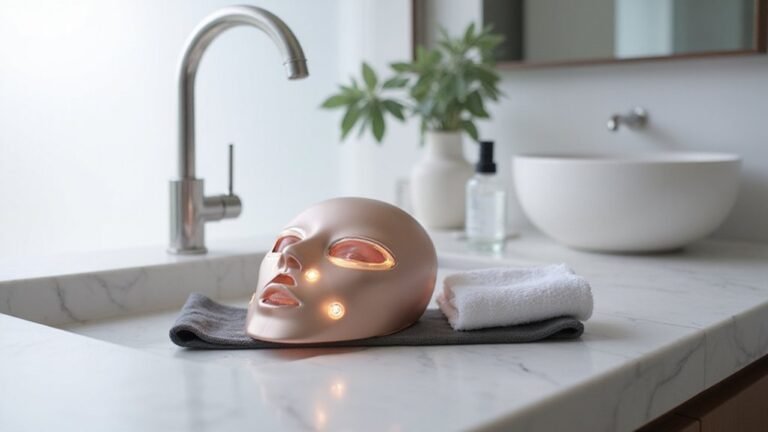
Yes, a derma roller can help fade mild to moderate acne scars when used at home, but patience is essential. Results tend to appear gradually over several weeks to months. The most noticeable improvements occur on wider rolling or boxcar scars, while narrower icepick scars are less responsive. You can expect some reduction in scar depth and texture, but complete removal is unlikely without professional treatments. Consistent use over approximately three months has been linked to positive changes, especially when combined with proper hygiene and technique. For reference, tattoo needles use specific needle groupings to achieve different effects, just as derma roller needle lengths influence skin response, and similar to how tattoo ink production involves grinding pigments to a fine, consistent particle size for safe application. To minimize risks such as worsening skin pigmentation or irritation, avoid rolling over active breakouts and always sanitize your device thoroughly between sessions. Using a needle length between 0.5 mm and 1.0 mm, with intervals of 10 to 14 days, is recommended for safe, effective results. Regular treatments can also help reduce pore size over time, although these effects are gradual. Keep in mind that deeper scars typically require professional intervention for more efficient and safer improvement. For those also exploring light-based options, a red light therapy mask can complement these efforts by supporting overall skin repair and reducing inflammation.
How a Derma Roller Boosts Collagen for Firmer Skin
When you roll a derma roller over your skin, the tiny needles create controlled micro-injuries that kick-start your body’s natural healing process. This process, called collagen induction therapy, directly stimulates collagen production. Platelets quickly arrive at the site, releasing growth factors that signal fibroblasts to activate. These cells then increase their output of collagen types I, III, and VII, along with elastin. You’re not just repairing skin damage—you’re actively rebuilding the skin’s structural foundation. Over the course of several weeks, new collagen fibers reorganize and strengthen, resulting in firmer and more elastic skin. Research indicates that multiple sessions can lead to up to a 400% increase in collagen levels. However, realistic expectations are important because results vary based on needle depth and skin condition. Regular use also helps treat superficial scars and fine lines from dermarolling benefits. This sequence of micro-injury, fibroblast activation, and matrix remodeling forms the core process of skin rejuvenation, ultimately giving you skin that feels and looks more resilient from within. Following regular sessions, you can then remove tape extensions safely without damaging your hair. To prevent infection during this process, it is essential to apply a clean wig cap over treated areas to maintain a sterile environment.
Why a Derma Roller Helps Your Serums Work Better
A derma roller creates micro-channels in your skin by temporarily disrupting the stratum corneum, the outermost layer. These tiny openings—measuring about 0.25 millimeters for common setups—allow serums to bypass the skin’s primary barrier and reach deeper layers more effectively. This process significantly enhances absorption, meaning your products aren’t just sitting on the surface. Studies indicate that a 0.25 mm roller can boost vitamin C uptake by nearly 300 percent, and research shows drug flux can increase by up to 100,000 times. By forcing serums past the skin’s defenses, smaller molecules like hyaluronic acid and lightweight hydrators penetrate best, delivering concentrated benefits directly where they’re needed. This results in faster, more efficient results since the active ingredients are biologically more available at their target sites. Without this process, much of your serum may simply sit atop your skin, offering less benefit for your investment. Achieving precise results with similar tools requires stencil paper for tattoos to ensure accurate transfer. Proper needle depth is also critical for safety and effectiveness, as going too shallow or too deep can lead to poor results or skin damage. Mastering the full method ensures consistent application and optimal outcomes.
How Often Should You Use a Derma Roller for Best Results?
The frequency you should use a derma roller depends mainly on the needle length. For 0.25mm rollers, use them 1 to 2 times a week or every other day to enhance product absorption. A 0.5mm roller works best once weekly for collagen stimulation. Longer needles, such as 1.0mm, require a 3 to 4 week break between sessions to allow proper skin healing and prevent irritation. When choosing a tool, also consider that top derma rollers are often selected based on needle quality and safety. Avoid overusing longer needles, as they can disrupt your skin’s healing cycle and increase the risk of irritation. Always wait until redness or discomfort has fully subsided before using the roller again. Your skin type also influences how often you should roll—sensitive skin needs longer gaps between sessions. Following these needle-specific schedules helps protect your skin barrier and ensures optimal results without damage. Just as with your roller routine, realistic wear times depend on consistent maintenance and avoiding overuse to extend the tool’s effectiveness. Proper application technique for a wig cap similarly requires careful timing and preparation for lasting results.