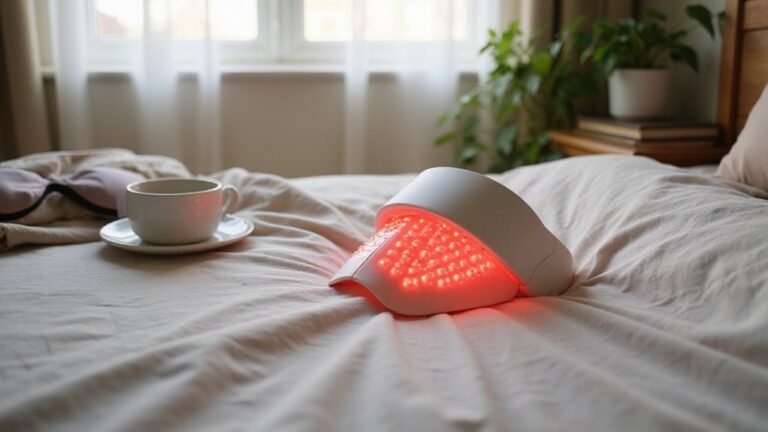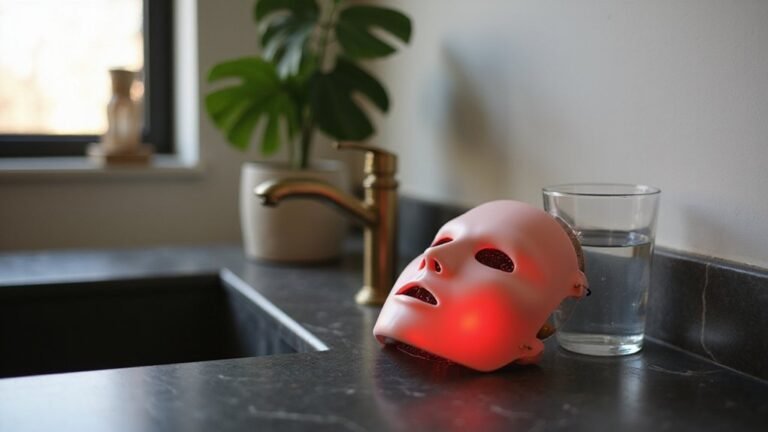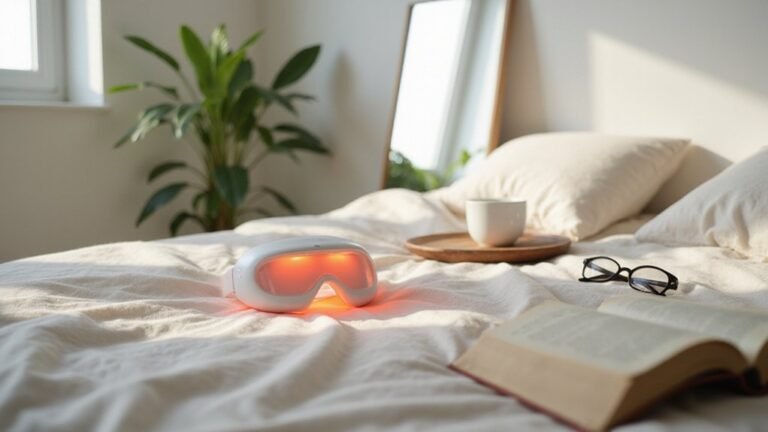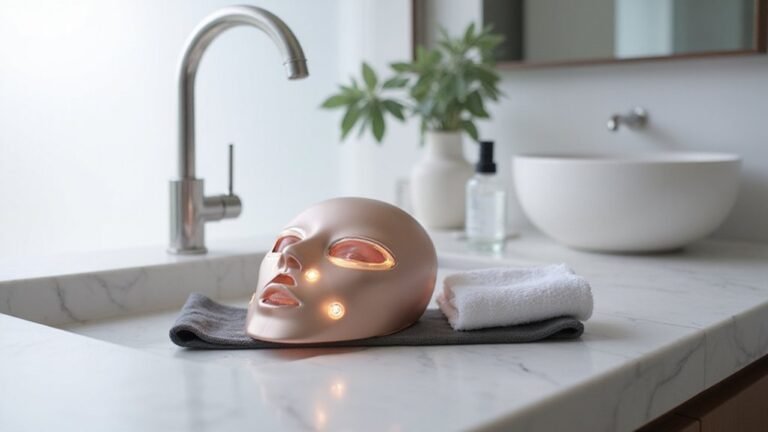

If you’re wondering how red light therapy masks actually work, you’re not alone. These masks use specific red light wavelengths, around 630 to 660 nanometers, to penetrate deep into your skin and target your cells.
By boosting cellular energy production, they help your skin produce more collagen and elastin. This can smooth wrinkles and improve firmness.
Keep reading to discover how to choose the right mask for your skincare goals.
How Red Light Therapy Masks Work (Photobiomodulation Explained)
Red light therapy masks work through a process called photobiomodulation, not by heat. This mechanism uses specific wavelengths of red light to stimulate your skin cells at a biochemical level. When the light penetrates your skin, it’s absorbed by the mitochondria, particularly through an enzyme called cytochrome c oxidase. This absorption triggers a series of cellular changes, increasing the production of ATP—the energy your cells need to function properly.
With more energy available, your skin cells can repair and regenerate more effectively. This results in increased activity of fibroblasts, the cells responsible for producing collagen and maintaining skin structure. As a consequence, your skin can become firmer and more elastic over time. Photobiomodulation also reduces inflammation and oxidative stress, leading to a calmer, healthier complexion. Because the LED lights are fixed in the mask, every session delivers consistent, targeted exposure, ensuring your skin receives the right dose each time. This approach not only addresses surface concerns but also resets cellular function at a fundamental level, promoting long-term skin health. Similarly, consistent use of a derma roller can also stimulate collagen production by creating controlled micro-injuries that trigger the skin’s natural repair process. Precise wavelength calibration is just as critical during manufacturing, as slight deviations can diminish the therapeutic effect, much like pigment grinding consistency affects a tattoo’s final color and stability. To ensure the mask is effective, you must remove tape residue from the device after each use, as buildup can block light penetration.
Which Wavelengths Target Wrinkles, Acne, and Redness
Wavelengths targeting wrinkles, acne, and redness differ primarily in how deeply they penetrate the skin and which concerns they address. Visible red light, around 630–660 nm, reaches only the upper layers of the skin—about 4 to 5 millimeters into the epidermis and upper dermis—making it effective for surface issues like redness and mild surface wrinkles. For deeper wrinkles, such as forehead lines, near-infrared wavelengths around 810–850 nm are needed because they penetrate further into the dermis, targeting underlying tissue to stimulate collagen without addressing redness or active acne. Redness generally responds best to wavelengths in the 630–660 nm range, as they reduce inflammation and boost circulation. Acne treatment can overlap with these wavelengths, especially when targeting inflammation and bacteria underneath the skin’s surface. However, for active, inflamed acne lesions, slightly different wavelengths or combination treatments might be more effective. Matching your device’s output to your specific skin concern is key. Shorter wavelengths like 630–660 nm excel at improving skin surface conditions, while longer near-infrared wavelengths are suited for deeper structural issues. Keep in mind that no single wavelength will perfectly target all issues—select based on your primary concern for the best results. For those addressing stretch marks alongside facial concerns, derma roller treatment protocols often pair microneedling with red light to enhance collagen remodeling in deeper tissue layers. When selecting a device, buyers should look for certified medical-grade devices to ensure safety and consistent output for targeted treatments. Understanding that different skin concerns respond to specific wavelength ranges helps users optimize their therapy sessions for maximal benefit.
How a Red Light Mask Boosts Collagen and Reduces Wrinkles
Red light masks boost collagen production and reduce wrinkles through photobiomodulation. They target your skin cells’ mitochondria with red and near-infrared wavelengths, which helps increase ATP production. This energizes fibroblasts, encouraging them to produce more collagen and elastin. As a result, fine lines and wrinkles gradually soften over time, typically within 8 to 12 weeks of regular use. However, while these masks can even out skin pigmentation by reducing inflammation, they also heighten sun sensitivity. That means you must apply strict sun protection to prevent damage and avoid negating your collagen benefits. Additionally, the anti-inflammatory effects of red light therapy slow down collagen breakdown, helping your skin stay firm longer. For best results, use the mask four to six times a week. Consistent sessions will help improve skin texture and promote gentle wrinkle reduction, but don’t expect dramatic changes overnight. Achieving even coverage across the full face requires careful positioning to ensure consistent light exposure, similar to maintaining angle control in other techniques. Proper tattoo machine technique involves correct grip and machine angle to ensure consistent needle depth, which is similar to maintaining consistent mask placement for even light exposure. Clinical studies support the efficacy of red light therapy for dermal remodeling and inflammation reduction.
What to Look For in a Red Light Therapy Mask
Look for a red light therapy mask with specific wavelengths—630 to 660 nanometers for red light and 800 to 850 nanometers for near-infrared light. These wavelengths have been shown to penetrate the skin effectively and stimulate collagen production while smoothing wrinkles. Vague “multi-spectrum” claims are less reliable; precise, targeted wavelengths provide better, more consistent results. For those with long hair, a secure wig cap can help keep strands contained while the mask is in use.
Ensure the device reports irradiance in milliwatts per square centimeter (mW/cm²) measured directly at your face. Higher irradiance levels mean more effective treatment in less time. Don’t rely solely on LED count or wattage, as these don’t directly correlate with how much light actually reaches your skin. A proper device should also include consistent LED spacing to avoid missed areas. Understanding that maximizing the lifespan of your device involves proper storage and cleaning will help preserve its performance.
Check the LED placement carefully. Dense, evenly spaced LEDs covering your forehead, cheeks, jaw, and chin ensure uniform treatment and prevent untreated gaps. A contoured mask that maintains a consistent distance between the LEDs and your skin enhances effectiveness and comfort during each session. Partial coverage can reduce results and waste your time and effort.
Prioritize safety features, including FDA 510(k) clearance and clear guarantees of no ultraviolet exposure and low heat. A lightweight, breathable design will be more comfortable and less likely to slip or press painfully during use. Opt for devices with transparent wavelength disclosures and independent testing, which differentiate serious, effective masks from gimmicks. Remember, you’re investing in tangible results, not marketing claims. A higher irradiance level directly ensures the treatment is both effective and time-efficient.
How Often Should You Use a Red Light Mask?
Most red light therapy masks work best with 3 to 5 sessions per week. This frequency strikes a balance between effectiveness and safety, helping improve skin texture, tone, and glow without risking irritation. You don’t need to use the mask daily; consistent use over time is more important. If your skin is sensitive, start with 2 to 3 sessions weekly to allow your skin to adapt gradually. Each session should last between 10 and 20 minutes, and it’s essential to wait at least 24 hours between treatments to prevent overexposure. Starting with shorter sessions can help your skin acclimate more easily. Understanding needle grouping configurations can help you compare how different devices deliver energy evenly to the skin.
Overusing the mask won’t speed up results and might cause irritation or redness. After 4 to 12 weeks of consistent use, you can transition into a maintenance phase of 1 to 3 sessions each week to sustain your skin improvements. Regularly cleaning your mask also aids in device upkeep by preventing dirt buildup and ensuring light is evenly delivered. For targeted acne treatment with red light masks, increasing to 5 sessions weekly can be effective, but for general skin glow, sticking to 3 sessions is typically sufficient. Similar to lip tattoo healing, avoiding overexposure is crucial to prevent irritation and redness.
Red Light Masks vs. Professional Panels: Key Differences
A red light therapy mask is best when treating the face directly. Masks are lightweight, hands-free, and rest comfortably on your skin, making them ideal for facial skincare routines. They are quick to put on and remove, and require minimal setup. You can easily incorporate them into your daily or weekly skincare routine without much hassle. If you are concerned about hair health, it is important to note that improper use of any device near the scalp could lead to hair shaft damage, similar to how tape extensions can harm natural hair if not applied or removed correctly. Following a beginner-friendly walkthrough for proper usage can help prevent such damage. Understanding appropriate treatment duration is also essential to avoid overexposure and maximize benefits.
In contrast, professional panels cover larger body areas and deliver higher irradiance for deeper tissue recovery. They typically need more space for setup and are best used when targeting multiple body zones or full-body treatments. Panels often require you to sit or stand at a specific distance from the light source, which can feel less natural during a routine.
User comfort favors masks because they are simple and convenient to wear, especially for facial applications. Panels may feel less integrated since they involve positioning yourself at a precise distance, which can interrupt your routine. Maintenance also differs: masks need gentle cleaning of their soft silicone surfaces, while panels require dusting of their larger, exposed LEDs. For portability and quick facial treatment, masks are the better choice. For broader coverage and more powerful results, panels are preferable. Your decision hinges on whether you need to treat just your face or your entire body.