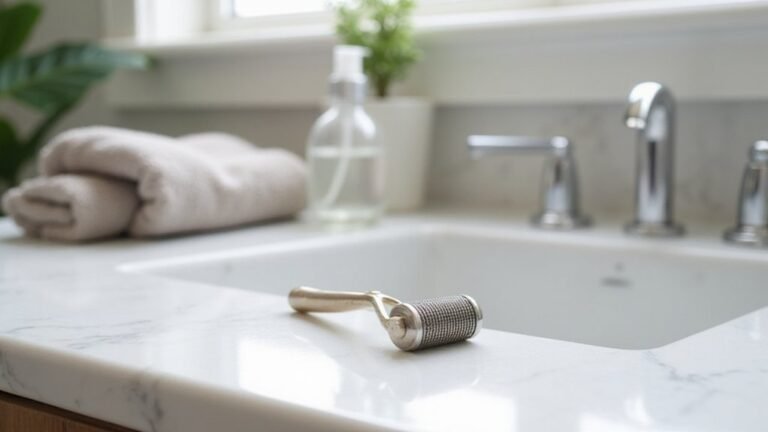
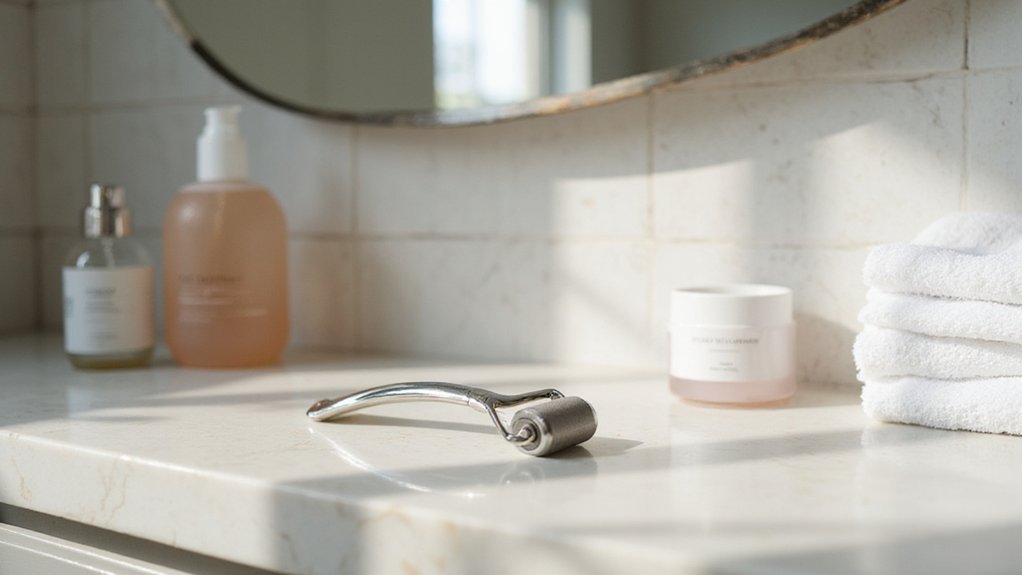
If you’re curious about how to use a derma roller properly, you’re in the right place. It’s a popular skincare tool that can boost collagen and improve skin texture, but the key is doing it right.
Using the wrong technique or neglecting prep can lead to irritation or ineffective results. Keep reading to learn the safest way to get the most out of your derma rolling sessions.
Why You Must Sterilize Your Derma Roller Before Every Use
A sterile derma roller is essential for safe and effective use. Manufacturing and packaging can introduce tiny, invisible contaminants that could cause infections or skin reactions. To prevent this, you should disinfect your roller with at least 70% alcohol or higher concentration before each use. Submerge the roller head in alcohol for at least 5 to 15 minutes to ensure proper sterilization. Similarly, the process of how tattoo ink is made often involves strict sterilization to prevent contamination of the product. The process relies on microneedling to create micro-injuries that trigger the skin’s natural healing response, making a clean surface critical. Skipping this step increases your risk of redness, breakouts, and scars, as bacteria or germs can be transferred to your skin. Prioritizing this disinfecting process is the best way to protect your skin and maximize the benefits of your derma rolling routine.

THE SOLUTION IS HERE: If you love microneedling therapy, this derma roller cleansing spray is perfect for at-home use. Avoid skin infections and breakouts easily with the alcohol solution for derma roller, a specially formulated isopropyl alcohol 99 percent spray that kills invisible bacteria on contact.

One 32 fluid ounce bottle of first aid antiseptic

How to Prep Your Skin for Derma Rolling
Before you pick up your derma roller, proper skin preparation is essential for safe and effective results. Start by cleansing your face thoroughly with a gentle, pH-balanced cleanser and lukewarm water. Avoid harsh foams or exfoliants at this stage. Pat your skin dry with a clean towel, ensuring there are no residual moisture or debris. Carefully inspect your skin for open sores, active acne, eczema, or sunburn; if any of these are present, postpone derma rolling until your skin heals. Just as tape hair extensions require careful removal and storage to maintain their adhesive quality, your skin must be free from any oils or residue to ensure the roller glides smoothly.
In the days leading up to your session, discontinue use of retinoids, alpha hydroxy acids (AHAs), beta hydroxy acids (BHAs), benzoyl peroxide, and potent vitamin C serums. Prioritize skin hydration by applying barrier-repair, fragrance-free moisturizers to strengthen and soothe your skin. On the day of rolling, keep your skincare routine minimal. Wipe the treatment area with 70% isopropyl alcohol, letting it air-dry completely. Once dry, apply only a basic hydrating serum like hyaluronic acid or proceed with the roller on dry skin. During the session, avoid applying active ingredients. If you use numbing cream, make sure to apply it thoroughly and remove it entirely before starting your derma rolling to prevent interference with the treatment and reduce the risk of irritation. Similar to handling tape extensions, always ensure the surface is clean and free of residue before beginning the procedure.

Low pH Good Morning Gel Cleanser: Cleanse daily with this gentle and effective gel type cleanser day and night, removing impurities while strengthening your skin barrier.
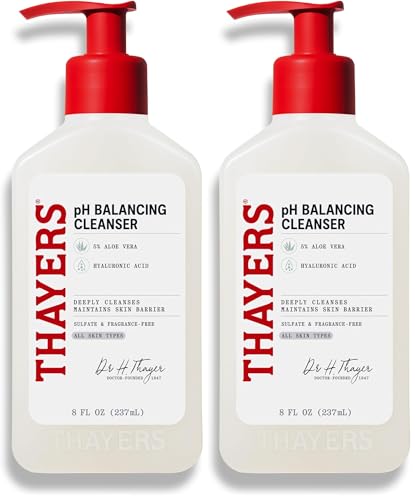
The information below is per-pack only

pH Balancing Cleanser: Clinically tested to help balance skin’s pH levels. Our gentle face wash removes dirt, oil, and impurities leaving skin feeling clean and not stripped. Skin looks balanced and feels softer after using this foaming facial cleanser
Which Needle Length Treats Scars, Wrinkles, or Hair Loss
Needle lengths for scars, wrinkles, and hair loss vary based on the treatment goal. For shallow facial scars, 1.0 mm needles are effective, providing enough depth to stimulate healing without damaging surrounding tissue. Deeper acne scars require 1.5 mm to 2.0 mm needles to reach sufficient depth for significant improvement. When treating wrinkles, 0.5 mm to 1.0 mm needles are ideal; they penetrate just enough to trigger collagen production without risking over-penetration. For hair loss on the scalp, 1.0 mm needles are recommended to bypass hair follicles and target the skin underneath effectively. Anything above 1.5 mm on the face begins to push the limits of safe home use and should generally be reserved for a professional clinic. Matching the needle length precisely to your treatment goal is crucial for safe, effective results. For beginners, however, starting with shorter needles is wise to build tolerance, just as DIY tape extensions require careful technique to avoid damage. This approach parallels how tape-in extensions rely on precise application to prevent traction or shedding.

The micro derma roller is easy to use, it is a popular skincare tool for anyone

Our 0.5mm Derma roller needles are the ideal safe size

The derma roller is easy to use, beginner-friendly, it is a skincare tool for home use
How Often to Derma Roll Without Damaging Your Skin
Shorter needles under 0.5 mm can typically be used up to three times per week, but always adjust based on how your skin is healing. For needles 1.0 mm and longer, wait at least two to four weeks between sessions. Never roll more frequently, as this can delay healing and cause irritation. It’s essential to watch for signs of overstimulation, such as persistent redness or peeling, and postpone your next session if they occur. Maintaining proper hygiene is crucial: sterilize your derma roller thoroughly before and after each use to prevent infections. Start with less frequent sessions, observe your skin’s response, and only increase frequency once full recovery is consistently achieved. Always consult a dermatologist before beginning a microneedling routine to ensure it is safe for your skin type. Red light therapy masks can also be used to support healing after derma rolling, as they may help reduce inflammation and promote skin recovery. Similar to how permanent ink tattoos can introduce long-term complications, improper derma rolling poses risks of infection and scarring if not managed carefully.

Start Your Beard Journey - No Viking Beard DNA? No problem! Begin your bearded adventure with our derma roller, the best tool for beard and skin care

Versatile Beauty Tool - Designed for personal care routines as part of a regular beauty regimen.

VERSATILE BEAUTY TOOL The Sdara Derma Roller is perfect for use on your face, hair, and beard, making it a comprehensive addition to your beauty routine.
The Right Way to Roll: Directions, Pressure, and Passes
The key to effective rolling is gentle pressure and proper technique. Disinfect your device by soaking it in 70% isopropyl alcohol for five to ten minutes. After disinfecting, clean the treatment area with a gentle cleanser and let it dry completely. When using the roller, hold your skin taut and roll in one direction at a time—first horizontal, then vertical, and finally diagonal. Lift the roller between passes to avoid dragging, which can cause unnecessary tension or irritation. Keep your pressure light; pressing too hard can damage your skin and negate the benefits of rolling. For beginners, limit each direction to four or five passes to prevent overworking the skin. Using a systematic, gentle approach ensures even coverage, reduces the risk of injury, and delivers consistent results. Avoid rushing or applying excessive force in any area, as overdoing it can lead to irritation or harm. For an added boost, pairing this routine with LED light masks can enhance collagen production and calm inflammation. Stick to controlled, deliberate motions for safer, more effective rolling. Consistent use over several months is typically needed to see improvements in skin texture. Understanding the composition of tattoo ink ingredients is also relevant for ensuring your derma roller is never contaminated with pigments that could cause adverse reactions.
Which Areas to Derma Roll: and Which Areas to Avoid
Certain areas are off-limits for derma rolling to prevent injury and irritation. Do not roll on delicate regions like the eyelids, lips, or the orbital eye socket, as the skin is extremely thin there and prone to damage. The under-eye zone requires extreme gentleness or should be avoided altogether because of its fragile skin. The nose warrants cautious, light passes to prevent skin irritation or accidental injury. Avoid rolling over active acne, moles, raised lesions, or inflamed skin because spreading bacteria or aggravating existing conditions like eczema or severe rosacea can worsen your skin. For alternative exfoliation methods, consider diamond microdermabrasion tips for gentler facial resurfacing. Even on permissible areas, you should always limit needle depth to 0.5 mm to minimize scarring and avoid damage due to facial surface variation. Reserve treatment for larger body areas such as thighs or arms when addressing stretch marks, but keep your strokes short and controlled to prevent trauma. When rolling on the scalp for hair growth, ensure you use a sanitized derma roller to avoid infection. Before any session, thoroughly cleanse the skin and tool to remove all traces of oils or debris, just as you would remove adhesive residue from a delicate surface. Properly identifying and respecting these boundaries ensures your treatment is both safe and effective.
What to Apply Immediately After Derma Rolling
Immediately after derma rolling, apply a gentle, hydrating serum with hyaluronic acid. This helps soothe your skin and takes advantage of the micro-channels created, which make your skin more receptive to absorption. Use lukewarm water to rinse your face and then pat dry with a soft towel. Follow with a lightweight, fragrance-free formula such as aloe vera or panthenol to support hydration and calm inflammation. Your main goal is barrier repair, not moisture alone, so focus on soothing ingredients. Keep your routine simple: a gentle cleanser and hydrating serum are enough for now. Avoid retinol, vitamin C, or acids, as they can irritate your open channels. Later, you can introduce a gentle repair cream, but initially, less is more. Give your skin a chance to rest and recover before layering on more potent active ingredients. To avoid damaging your skin, ensure your derma roller is clean and you never share it with others, much like safely removing tape-in extensions requires careful technique and proper supplies. Just as tattoo ink may contain pigment carriers and heavy metals that impact skin health, choosing the right topical ingredients is crucial for safe recovery. You should also wait at least 24 to 48 hours before washing your hair after removal to allow the scalp to recover.

Dont Hide That Glow - Your face tells a story, make sure it's a cute one! Feel confident all day everyday with our hyaluronic acid serum. Get rid of hyperpigmentation that is slowing you down with this serum - your face & skin will thank you!
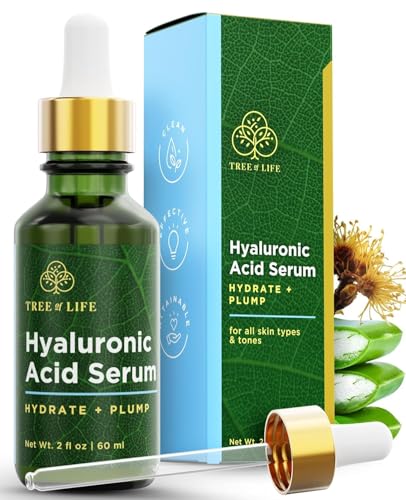
MOISTURIZE SKIN: Enriched with the magic of Hyaluronic Acid, it not only locks in essential moisture but also plumps and smoothens your skin for an irresistibly soft touch. Its elasticity-boosting properties ensure a supple, brightened complexion, promising a radiant glow and visibly youthful skin. Perfect for those seeking a smoother, brighter, and rejuvenated facial appearance.
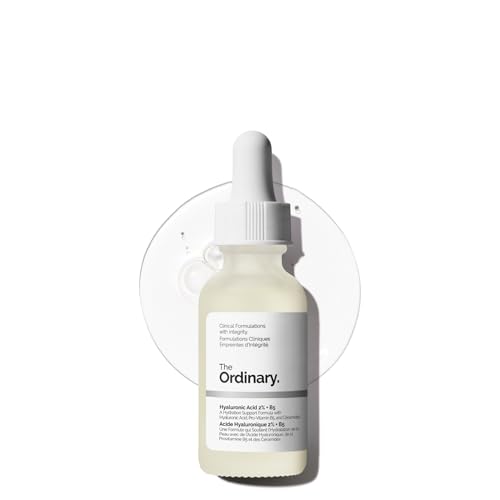
INSTANT HYDRATION: Provides immediate, long-lasting hydration for smoother, plumper, and healthier-looking skin.
4 Common Derma Rolling Mistakes and How to Fix Them
Using too much pressure is a common mistake that can actually harm your skin. Apply gentle, controlled motions instead of pressing hard, which can cause tears or irritation. This aggressive technique can damage hair follicles and lead to scar tissue formation. Choosing the wrong needle size is another error; for home use, opt for 0.25 to 0.5 mm needles. Larger sizes are unnecessary and can increase the risk of scarring. Overusing your roller can lead to inflammation; limit sessions to once every one to four weeks. Hygiene is essential—soak your roller in 70% isopropyl alcohol for 10 minutes before and after each use to prevent infections. Lastly, never roll over active acne, eczema, or open wounds. Wait until your skin calms before resuming treatment. Addressing these mistakes will ensure safer, more effective results. Consistent needle depth control is also critical to avoid damaging deeper skin layers, just as tattoo artists regulate machine pressure to prevent trauma.