You might wonder if tattoo ink ever goes bad or expires. The answer is yes—unsurprisingly, ink does have a shelf life.
Knowing how long your ink stays safe can save you from potential infections or poor healing.
Here’s what you need to know to keep your inks fresh and safe for use.
Does Tattoo Ink Expire? Yes: Here’s How Long It Lasts
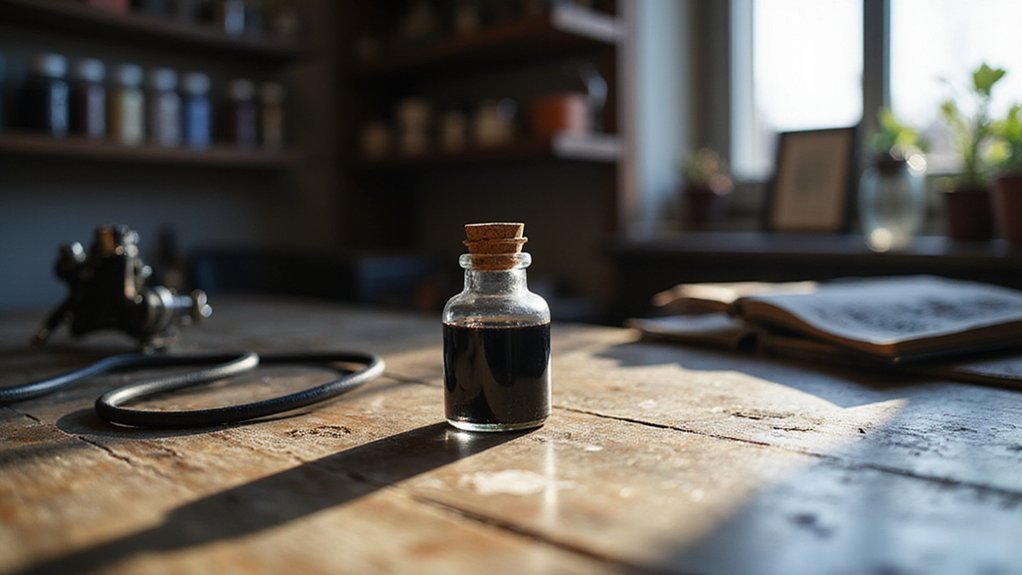
Tattoo ink typically expires after around two years, even if the container remains sealed. Over time, its quality and safety can decline, which increases the risk of adverse reactions. The most reliable way to determine if your ink is still usable is to check the manufacturer’s expiration date and lot number, rather than relying on its appearance. Proper storage is essential: keep bottles in a cool, dark place between 60°F and 80°F, away from direct sunlight. Modern tattoo inks often contain pigment carriers and colorants that can degrade chemically, further compromising safety over time. Once opened, the risk of contamination rises due to air exposure and handling. It is recommended to use opened ink within 6 to 12 months to ensure safety. Always prioritize safety over cost and discard any ink that shows signs of degradation or if the expiration date has passed. An improper machine technique can also introduce airborne contaminants into the ink bottle during use. Similar to caring for hair extensions, Proper storage helps maintain product integrity and safety.
Unopened Tattoo Ink Lasts 1 to 5 Years
Unopened tattoo ink generally lasts between 1 to 5 years. The most common shelf life falls between 2 and 3 years when stored properly. Always check the manufacturer’s expiration date first, as it accounts for the specific formulation and manufacturing process of the ink. Store unopened bottles in a cool, dark place between 60 and 75 degrees Fahrenheit to preserve quality. The manufacturing process described in the full method of how tattoo ink is made directly influences the consistency and longevity of the final product. Avoid exposing the bottles to extreme heat, freezing temperatures, or high humidity, as these conditions can degrade the pigment or damage the seals. Even when unopened, treat the ink as a time-sensitive product. Unless the label explicitly states a longer shelf life, plan to use your stock within 2 to 3 years for optimal results. Before using, always inspect the bottle for any signs of spoilage or damage, regardless of the expiration date. Understanding what tattoo ink is helps you evaluate its safety and suitability before use. Proper storage conditions like those used for wig cap care can help maintain product integrity over time.
Opened Tattoo Ink: Use Within 6 to 12 Months
Once you break the seal, tattoo ink should be used within 6 to 12 months. This timeframe is crucial because exposure to air and potential contamination accelerate quality degradation. To maximize the ink’s usability, store bottles tightly sealed in a cool, dark place with stable temperatures. Always label bottles with the opening date to track their age. Implement a first-opened, first-used rotation to ensure older ink is used before newer supplies. Frequent opening and temperature fluctuations can further reduce the ink’s lifespan. Practicing proper hygiene is essential to prevent bacterial growth and contamination. Even if the ink appears fine, its potency begins to decline before spoilage is obvious. Adhere to the 6 to 12 month guideline strictly and discard any ink that surpasses this period to ensure safety and results. Using expired ink can increase the risk of skin reactions and other adverse effects, as the degraded chemical composition may not be safe for application. Microscopic contaminants can also introduce infection risks if the seal is compromised.
5 Warning Signs Your Tattoo Ink Has Gone Bad
Five clear warning signs indicate your tattoo ink has gone bad. First, check for color fading. If your ink appears dull, murky, or significantly different from its original shade, pigment breakdown is likely occurring. Next, feel for texture changes—thickened, clumpy, or gritty ink won’t apply smoothly and suggests instability. You should also watch for persistent separation, where pigments settle at the bottom and refuse to remix, resulting in uneven application. Sniff the ink—any foul, sour, or rancid odor signals bacterial growth or chemical degradation that necessitates discarding. Be aware that carrier solutions and other ingredients can degrade over time, leading to odor and performance issues. Proper machine setup is essential for ensuring ink performance and avoiding contamination. Additionally, choosing high-quality sterile inks can reduce the risk of bacterial contamination during storage. Finally, look for contamination such as particles, mold, or cloudiness, which mean the ink’s integrity is compromised. Ignoring these signs can lead to infections and poor tattoo results.

📦[ASEPTIC PACKAGING]: Are you worried about the hygiene of the color cup? 10-Connected tattoo ink cup is individually sealed, Aseptic packaging, safe, maximum hygiene—no contamination risk during storage or use. Ideal for professional tattoo studios and P.M.U artists.

Professional grade black tattoo ink formulated for smooth consistent flow and clean line work

100% new brand and high quality. Favored among professional tattoo technicians.
Why Tattoo Ink Goes Bad: Contamination and Chemical Breakdown
Chemical degradation is a primary reason tattoo ink goes bad. Exposure to air causes oxidation, which fades the colors and makes them less stable over time. The ingredients can separate or thicken, resulting in a lumpy consistency that’s impossible to remix evenly. This breakdown not only diminishes the ink’s vibrancy and longevity can also make it unsafe for use, much like how tape extensions can damage natural hair through chemical and physical stress. Using low-quality water during mixing can accelerate this process, as impurities introduce contaminants that speed up chemical breakdown and bacterial growth. Both contamination and chemical changes add up to a significant risk, often going unnoticed until it’s too late. To maximize the ink’s usable life, artists should follow refit timing guidelines for checking and replacing old stock.

COMPLETE AFTERCARE KIT FOR NEW & EXISTING TATTOOS: This Tattoo Aftercare Kit brings together 3 essentials, Antimicrobial Soap, Tattoo Balm, and Tattoo Lotion, to help cleanse, protect, and moisturize fresh ink. Useful after tattoo sessions and throughout healing, it supports vibrant color and skin comfort for dedicated ink enthusiasts and artists

Pearhead Pet Ink Pad: Includes 1 ink pad and 2 impression cards, perfect for capturing your pet’s paw prints and nose prints.

Dragonhawk Traditional Pro Complete Tattoo Kit: Features two cast iron tattoo machines with full set to make tattooing quick and easy. The lining & shading machines help make it easy to get right tattoo style. You can play and adjust any parts with Dragonhawk pro coils machines. The tattoo machines has a powerful, long-lasting coils. The needles are also stainless steel to provide outstanding cutting performance.
Store Tattoo Ink Away From Light and Heat to Delay Expiration
Storing tattoo ink away from light and heat extends its shelf life and preserves its quality. Heat accelerates chemical breakdown, so keep bottles in a cool, dry environment, ideally between 60°F and 80°F. Avoid placing them near radiators, direct sunlight, or hot workstations, as excessive heat can cause pigments to degrade more quickly. Light exposure, especially UV rays, triggers pigment fading and dulls vibrancy even before opening the bottle. To prevent this, store ink in dark cabinets, drawers, or cases; opaque packaging offers extra protection against light. Temperature fluctuations also speed up degradation, so aim for a stable environment. Keep bottles upright, sealed, and away from exposed counters when not in use. Using appropriate needle grouping configurations also reduces the risk of cross-contamination during the tattooing process, as different needle configurations are designed for specific lining and shading tasks. Elevating bottles from work surfaces on a mirror or step-up platform further supports cleanliness and organization. Proper storage won’t make ink last indefinitely, but it will help maintain its performance closer to the manufacturer’s expiration date. Applying the same principle as derma roller frequency, a consistent storage routine prevents ink from degrading faster than expected.
What Expired Tattoo Ink Does to Your Skin
Using expired tattoo ink puts your skin at significant risk because it can harbor bacteria and degrade chemically. Once ink passes its expiration date, its chemical stability diminishes, increasing the likelihood of bacterial growth that can cause infections. These infections can interfere with proper wound healing and even damage deeper tissues. Additionally, degraded pigments are more prone to trigger hypersensitivity reactions, leading to eczema, swelling, or delayed inflammation that may emerge years later. Severe reactions such as hyperkeratosis, tissue necrosis, or ulceration are also possible, leaving permanent scars. Over time, the tattoo’s appearance can deteriorate as the pigment becomes unstable, causing blurring or shifting colors, which distorts the original design. UV exposure further accelerates pigment breakdown, worsening inflammation and skin damage. A peeling tattoo from expired ink often leads to ink loss that exposes raw skin and increases infection risk. Research on tattoo ink safety indicates that cancer risks are a growing concern with degraded pigments. To protect your skin’s health and the longevity of your tattoo, always choose fresh, chemically stable ink and avoid using expired products.
Can You Use Expired Tattoo Ink on Clients? No
Using expired tattoo ink on clients is unsafe and should be avoided. Manufacturers set expiration dates based on chemical stability and microbiological safety, not guesswork. Once that date passes, the ink’s safety for skin penetration is no longer guaranteed. Opened bottles face an increased risk of microbial growth after about 12 months, especially if not stored properly. Even if the ink appears fine, contamination can still be present, posing serious health risks. Degraded ink can separate, thicken, or flow poorly, which negatively affects tattoo quality and healing. Using expired ink increases the chance of infections, redness, fever, and scarring. To protect your clients’ health, always discard expired ink immediately and follow the manufacturer’s date exactly.
Find Expiration Dates on Tattoo Ink Bottles
The expiration date on a tattoo ink bottle is usually printed somewhere on the label, often near the lot number or manufacturing details. You might find it on the front, back, or bottom of the bottle. Look for abbreviations like “EXP,” “use by,” or “MFG” followed by a date. Some bottles don’t display a clear date; instead, they may indicate a shelf-life window. Unopened tattoo inks typically last between 1 and 3 years, though this varies by brand and formulation. Once opened, the ink degrades faster and should be used within a shorter period.
Always refer to the manufacturer’s guidelines because shelf life and storage recommendations differ. Proper storage—keeping the bottle away from excessive heat and light—can extend the ink’s usable life. If only a lot number appears on the label, contact the brand or manufacturer directly to interpret the date or shelf-life. Don’t guess or rely solely on visual inspection; treat the printed date or shelf-life information as your primary discard guideline.

🦋Note:Please shake the ink before use.

Tattoo Ink Caps Kit - This set includes 2 black tattoo ink cup holders and 300 disposable tattoo ink caps in mixed sizes. Large ink cups measure 15mm in diameter, medium 12mm, and small 8mm—100 pieces of each. These caps help simplify ink mixing and are suited for a variety of tattoo styles and techniques.

100% new brand and high quality. Favored among professional tattoo technicians.
When Tattoo Ink Expires, Throw It Out
If the tattoo ink shows an expiration date or you’ve had it open for more than 6 to 12 months, it’s safest to discard it. Ink degradation caused by heat, light, or humidity can compromise sterility and consistency even before the printed date. Signs like separation, thickening, or a strange odor are clear indicators that the ink has gone bad. Using old ink increases the risk of infection or scarring for your client. Evaporation and microbial growth make expired ink unreliable and unsafe. Prioritize your client’s health and don’t hesitate to throw out any old or questionable ink.