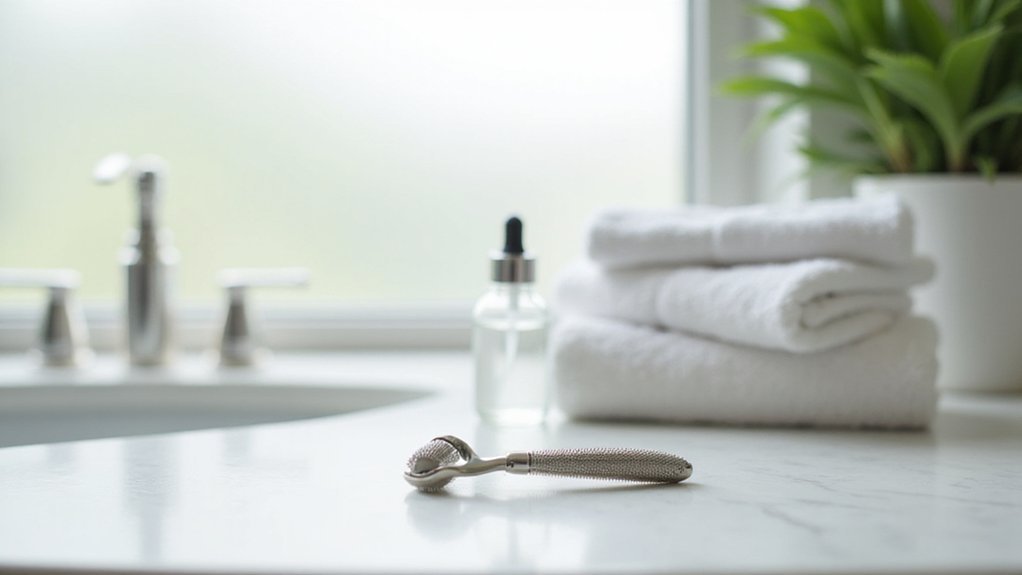
Want to know whether a derma stamp or roller is better for scalp treatments? The answer depends on your needs: a derma stamp offers more precision for small or sensitive areas.
Meanwhile, a roller covers large spaces quickly and affordably. The key to effective results is choosing the right tool for your routine.
Keep reading to find out which suits you best.
How Derma Stamps and Rollers Work for Hair Growth
Using a derma stamp or roller creates controlled micro-injuries on your scalp, a process called microneedling. These tiny punctures stimulate your body’s healing response, increasing blood flow and releasing growth factors like VEGF and PDGF. This activation helps wake up dormant hair follicles and supports their natural growth cycle. The micro-injuries also trigger a surge in collagen production, which strengthens the scalp tissue around each follicle. Proper training techniques are crucial: with a stamp, use vertical press-and-lift motions, while with a roller, apply steady, even pressure with smooth rolling motions. Consistency in technique prevents over-treating or harming your skin. The device typically consists of a handle and drum with fine needles that puncture the skin to initiate this process. Microneedling also creates tiny channels that improve the absorption of topical treatments such as minoxidil, allowing these products to penetrate deeper and work more effectively. Just as with hair extensions, proper care and maintenance routines can significantly extend the lifespan and effectiveness of your microneedling device. Equipment maintenance is equally important: clean your device thoroughly with alcohol before and after each use, replace the needles every three to four sessions, and avoid sharing it with others.
Derma Stamp vs Roller: Precision vs. Coverage
A derma stamp offers greater precision, making it ideal for targeted areas on your scalp. It presses straight down, creating vertical punctures that limit micro-tearing and reduce irritation, especially when treating small patches or sensitive zones like the hairline or crown. The controlled, sterile approach of the stamp is particularly beneficial for beginner-friendly walkthrough steps, ensuring safety and consistency. In contrast, a derma roller covers larger surface areas quickly by rolling needles across the skin, providing faster overall coverage. However, rollers can create angled punctures due to their sideways motion, which may cause more trauma and less control. If you’re focusing on specific spots, the stamp allows for accurate placement, while the roller is better suited for broad, even coverage when you want to speed up the process. Unlike the roller, the stamp’s vertical puncture method mirrors the controlled, sterile pigment delivery process used in professional tattooing. For those prioritizing safety, the stamp’s design also reduces the risk of needle drag commonly associated with roller devices.

Needle Length: Gentle 0.25mm – very friendly for beginners.

SCALP RELIEF TREATMENT: This powerful water-based dry scalp treatment soothes, calms and nourishes an itchy scalp and promotes repair as it replenishes and moisturizes for a balanced, healthy scalp.

Enjoy microneedling at home anytime without expensive cost.
Why Stamps Are Gentler on Your Scalp
A derma stamp is gentler on your scalp because it enters vertically rather than dragging across the skin. This results in cleaner punctures with less lateral trauma, meaning there’s minimal skin stretching. Unlike rollers, which pull at the skin at an angle and can cause micro-tearing, a stamp’s controlled motion reduces damage. It also prevents hair strands from snagging under the needles, making the procedure more comfortable, especially for those with longer hair.
Additionally, the precise targeting of a stamp limits contact only to the treated spots, reducing unnecessary irritation. The cleaner wound pattern created by stamping heals faster than the fragmented tears often caused by rollers. For sensitive areas or thinner scalp skin, many prefer stamps because the stop-and-start motion feels safer and gentler. Overall, the design minimizes drag and tug, providing a more scalp-friendly experience during microneedling sessions.
Choose the Right Needle Depth for Your Hair Goals
Derma Stamp vs Roller: Which Is Best?
Choose the Right Needle Depth for Your Hair Goals
Choosing the right needle depth depends on your specific hair goal. For topical absorption support near the hairline, use 0.25 mm to 0.5 mm; this targets the skin barrier without penetrating deep into the follicles. For general scalp stimulation aimed at improving overall hair health, 0.5 mm to 1.0 mm is appropriate, respecting your scalp’s elasticity to avoid unnecessary trauma. When targeting pattern hair loss with clinical support like minoxidil, research indicates that 0.6 mm offers better hair count and thickness compared to 1.2 mm. Going deeper isn’t always better—protocols sometimes use 1.0 mm to 1.5 mm for intensive treatments, but anything beyond 1.5 mm to 2.5 mm increases risks like irritation and pinpoint bleeding. The thicker skin on your crown may tolerate slightly deeper penetration, but the hairline generally requires shallower needle depths. Always choose high-quality needles to ensure precise, consistent depth and minimize unnecessary damage. Notably, a recent study found that the 0.5 mm group demonstrated the best outcomes for hair growth, supporting recommendations to avoid penetrating into the hair follicle stem cell bulge. For those curious about the mechanism, understanding how tattoo machines work can provide insight into how consistent needle penetration creates effective microchannels. When planning your sessions, consider safe frequency guidelines to allow proper recovery time between treatments at your chosen depth. For mannequin heads used to practice braiding, choosing a model with realistic scalp texture ensures more accurate training for needle depth application.

✅ FOR HAIR AND SKIN CARE: Designed with 0.25 mm ultra-fine needles for even and precise application, suitable for scalp and facial use.
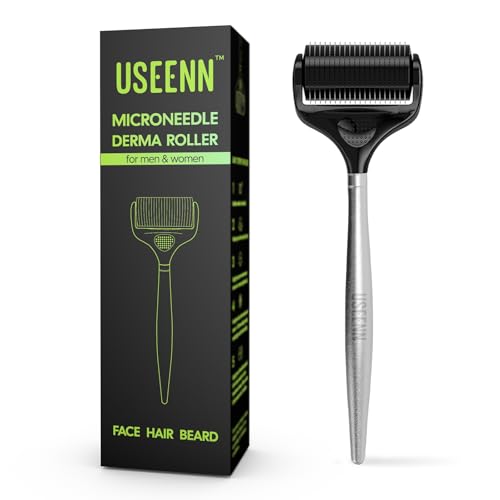
✅Larger Coverage Area: With 1200 needles—more than double a standard 540-needle roller—our design increases contact with skin, scalp, and hair for a smoother, more efficient beauty routine.

Multi-purpose: Our microneedle roller can be applied to face, hair, beard, he is not only a face roller, but also can be used as a scalp roller, or beard roller! for a more comprehensive beauty routine.
What Studies Say About Using Stamps vs Rollers for Hair Growth
Both derma stamps and rollers can promote hair growth, but evidence shows that needle depth matters more than the tool itself. A 2004–2024 review found microneedling effective for stimulating hair growth, yet most studies used rollers rather than stamps. A rare 2023 study comparing 30 men directly found no significant difference in hair regrowth between a roller and a device with vertical needles. This suggests that the key factor is how deep the needles penetrate skin, not whether you use a stamp or a roller. While marketing often claims stamps are superior because their vertical needles target skin more precisely, clinical evidence doesn’t support this. Both tools improve absorption of topical treatments like minoxidil when used correctly. Similarly, LED facial masks rely on consistent use and proper device specifications more than brand hype, with results typically emerging after several months of regular sessions. For optimal outcomes, consistent application over regular sessions is crucial for both microneedling and light-based devices. Therefore, your focus should be on needle depth and proper technique, rather than on choosing one device type over the other. For those who prefer a DIY approach, knowing how to fit a sewing a wig cap can help ensure consistent needle placement and scalp access.
Real Talk: Speed, Cost, and How Easy Each Tool Really Is
The roller is faster for covering large areas because its rolling arc treats more skin with each pass. This makes it ideal for broad zones like your entire scalp or cheeks. However, for small spots like your temples or hairline, the stamp offers more precision with its vertical press-lift motion, allowing you to target specific areas without extra movement.
In terms of speed, you’ll usually finish a full-face session quicker with the roller. But because the stamp gives you better control, you’re less likely to drag your skin, which is helpful for delicate or curved areas.
Cost-wise, the roller tends to be more budget-friendly and easier for beginners because of its simple design. The stamp’s precision comes at a higher price point, reflecting its targeted accuracy.
Ease of use depends on your goal. The roller’s straightforward rolling feels natural on large, broad zones, while the stamp requires deliberate placement but excels in precise, small-area work. Its design versatility also allows you to adjust needle depth for different spots, making it more adaptable for detailed or curved areas. However, the stamp’s controlled pressure helps avoid excessive pressure, especially during rolling, which is crucial for safety.

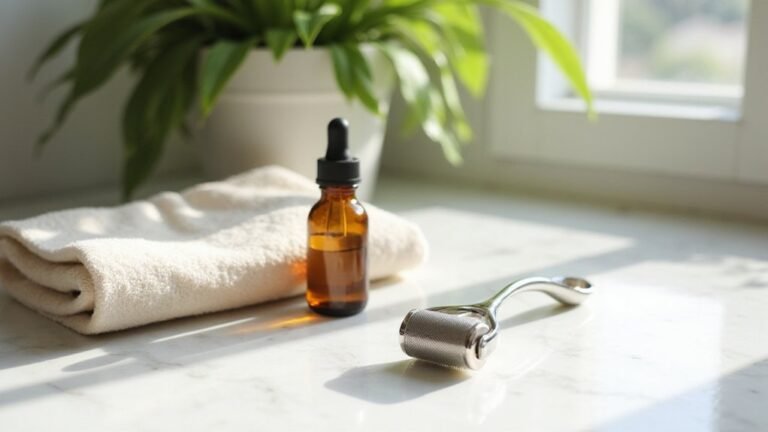
Our 0.25mm Derma Roller is very simple in using at home.

The derma roller is easy to use, beginner-friendly, it is a skincare tool for home use

Precision Serum Applicator Designed with 140 ultra-fine pins, this tool helps evenly apply your favorite scalp and beard care serums
Derma Stamp vs Roller: Which One Fits Your Routine Best?
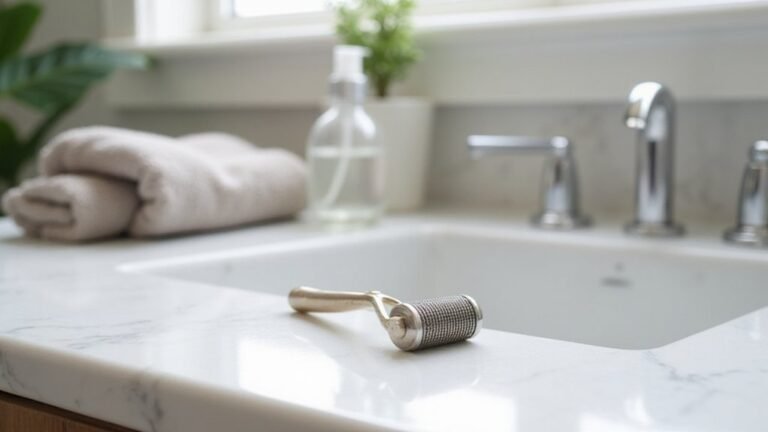
A derma roller is better suited for covering large areas quickly, making it ideal for general facial rejuvenation. It works by rolling across the skin, which allows you to treat bigger zones in less time. However, this dragging motion can cause more micro-tearing compared to stamping, potentially leading to increased irritation if not used carefully. For those seeking a gentler alternative, red light therapy masks offer non-invasive skin rejuvenation with no micro-tearing at all. Similar to the importance of safe removal steps for tape-in extensions, proper tool hygiene is crucial for preventing skin damage with microneedling devices. Following use, sterilizing the roller with alcohol ensures lasting tool safety and hygiene.
Tool maintenance is an important consideration. Stamps have fixed needles, making them easier to clean thoroughly after each use. Rollers, on the other hand, require meticulous washing to remove debris from the many tiny needles, reducing the risk of bacterial buildup. Choosing between the two depends on your priorities: if you prefer precision and minimal irritation, a stamp is the better option. If speed over larger areas is your goal, a roller might serve you best.