Worried about removing lace wig glue without damaging your hair or the lace? Knowing the right methods can make the process safer and easier.
By softening the adhesive first and gently lifting the lace, you can protect your scalp and keep your wig looking good for next time. Keep reading for simple steps to remove glue smoothly and safely.
Why Safety Comes First When Removing Wig Glue
Prioritizing safety is essential to prevent skin damage, scalp injuries, and damage to your wig. Before starting removal, protect your skin and hairline by avoiding harsh adhesives and aggressive removal techniques. Different adhesive types vary in strength, but all can harm your skin or scalp if mishandled. Strong removers can disrupt your skin barrier, increasing the risk of infections and contact dermatitis. Yanking dried glue can also pull out fine edge hairs, resulting in thinning or permanent bald spots. Using harsh chemicals may degrade lace fibers and loosen hand-tied knots, shortening your wig’s lifespan. For a less permanent alternative, consider tape-in or clip-in hair extensions as they require no adhesive removal and pose minimal risk to your natural hairline. Taking safety precautions now helps prevent post-inflammatory hyperpigmentation and follicular inflammation, ensuring both your scalp and your investment stay healthy over time. Understanding that microneedling increases skin permeability helps explain why micro-injuries from a derma roller require extra caution with adhesives near wound healing. Choosing a beginner-friendly wig cap can also reduce your reliance on strong adhesives altogether.
Supplies You’ll Need for Wig Glue Removal
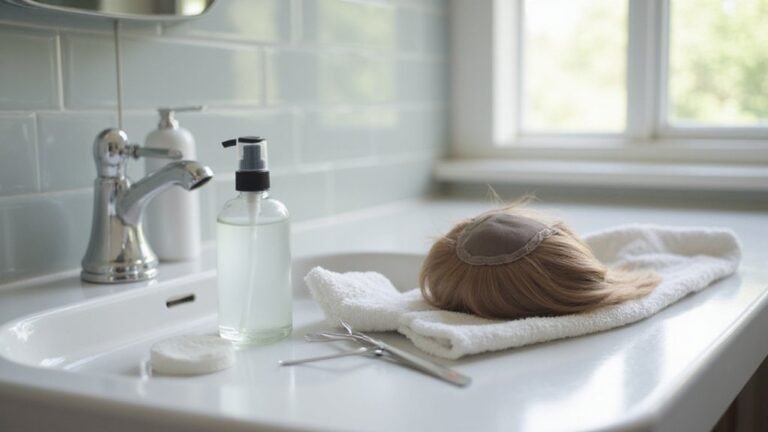
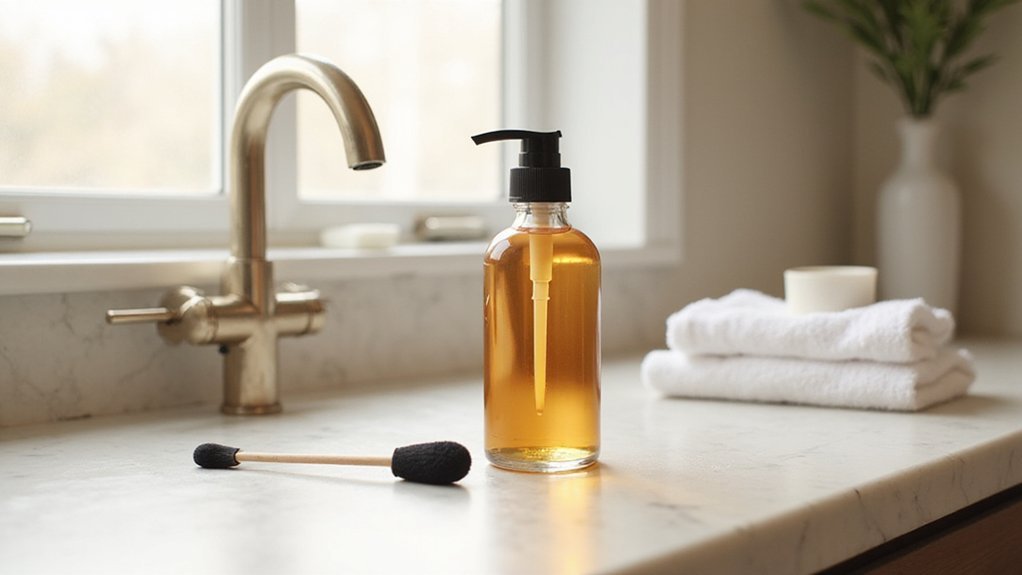
To safely remove wig glue, gather these essential supplies. You’ll need a wig-safe adhesive remover designed specifically for lace or synthetic wigs, ensuring it won’t damage your material. Isopropyl alcohol works well on stubborn spots, especially if you’ve used strong fabric adhesives. Keep coconut or baby oil nearby to gently loosen residual glue without harming the lace. Use cotton pads and swabs for precise application, and a soft toothbrush to gently scrub away adhesive buildup. A wide-tooth comb helps detangle your wig after the removal process. Stabilize your wig with a wig stand to prevent stretching or tearing during cleaning. Avoid acetone-based products, as they can damage lace material. For delicate or hard-to-reach areas, professional tools like a glue-remover brush or spatula can save time and improve accuracy. Finish with clean towels for blotting excess liquids, then wash your wig with a sulfate-free shampoo to maintain its quality and extend its lifespan. Properly equipped, you’ll minimize damage and keep your wig looking its best.

Quick & Easy Removal: Effortlessly removes lace wig glue, tape-in extensions, and adhesive residue in under 5 minutes, without the need for harsh scrubbing or excessive effort.

FAST-ACTING BOND REMOVER: Dissolves wig tape, extension tape, and adhesive residue for lace systems and tape in hair extensions human hair; ideal for daily wearers needing quick cleanup.
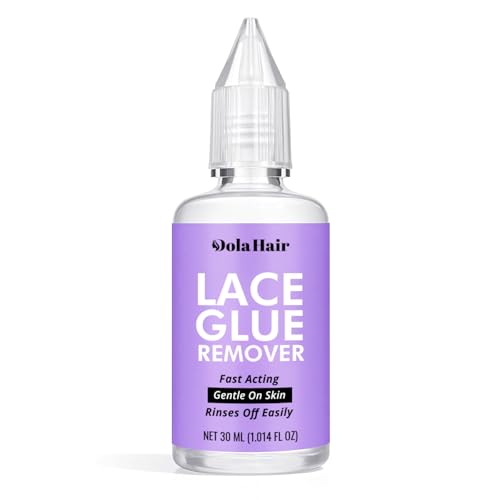
Dolahair Lace glue Remover can remove adhesive residue from a variety of cosmetic bonding products and can be used for all tape-in hair extensions including skin wefts damaging the hair, skin or scalp.
How to Soften Wig Glue Before Lifting the Lace
To soften wig glue before lifting the lace, you should apply a warm, damp towel directly onto the glued perimeter for 3 to 5 minutes. Ensure the towel is warm but not hot to avoid scalp irritation. This heat helps loosen most adhesive types, making the removal process gentler. Before applying heat, always test a small area to ensure the wig cap material can withstand the temperature. Similarly, tattoo ink production often uses heat to bind pigments into a smooth, stable carrier solution.
In addition, natural oils like coconut or jojoba can be effective. Apply them directly onto the glue and massage in gentle circles. Let the oil sit for 5 to 20 minutes to penetrate and further weaken the bond.
For stubborn spots or more resistant glue, use a cotton pad soaked in 70% or higher rubbing alcohol. Press the pad onto the area for 30 to 60 seconds; the alcohol dissolves the adhesive.
If your scalp is sensitive, a softer approach using soap and warm water may be preferable. Be patient during the softening process and avoid forcing the lace off. Once the glue becomes loose, gently lift the edge upward, following your natural hairline. This process is similar to how tape extensions work, where heat and oil break down the adhesive bond to allow clean removal. If you feel resistance or pull, reapply the softening method rather than scraping or forcing the lace free.
Best Products for Wig Glue Removal
Alcohol-based sprays are effective for wig glue removal; spray them along the adhesive line and gently wipe with a soft cloth to loosen the solution. For a gentler method, oil-based solutions such as coconut or olive oil work well. Apply the oil to the residue and let it sit for 10 to 15 minutes, allowing it to break down the glue’s bond. Baby oil and almond oil are also suitable alternatives, offering similar results. If you prefer a more natural option, peanut butter can be used—spread it over the glue and leave it for 30 minutes to an hour before wiping away. For a more targeted approach, apply a specialized adhesive remover designed for lace wigs to gently dissolve the bond without damaging the lace. This process works similarly to how green soap breaks down adhesives in professional settings, ensuring a safe and residue-free finish.
Another economical choice is dish soap. Apply the foam generously over the glue and let it sit for 1 to 2 hours. Rinse thoroughly afterward and follow up with a wig-specific shampoo, such as SheaMoisture, to restore softness and ensure all lingering product is removed. For those seeking a gentler alternative, coconut oil works as a natural solvent to dissolve residue without irritation.
Step-By-Step Guide to Cleaning Glue From Lace
To effectively remove glue from lace, start with a clean, cool wig secured on a stand. Inspect the lace edge carefully to identify areas with concentrated adhesive. Avoid applying heat during this process, as it can weaken the lace fibers and make removal more difficult. Instead, soften the glue by gently soaking the area with warm water, allowing the adhesive to break down. Let it sit briefly—about 30 seconds to a minute—so the glue is easier to lift. For tougher residue, consider that a skin pen offers a more targeted application of adhesive remover compared to a standard bottle dropper.
Use a microfiber-tipped applicator to gently lift the softened glue, moving parallel to the lace to prevent tearing the mesh. Work in small sections, reapplying softener if you encounter resistance. Never use metal tools or scrapers, as they can tear or damage the delicate lace. Focus your cleanser only on visible glue spots to avoid unnecessary contact with the mesh. Once the residue loosens, carefully roll or wipe it away using the applicator. Rinse the lace with lukewarm water to remove any remaining adhesive and cleanser. Pat the lace dry with a lint-free cloth and let it air-dry on a stand.
After drying, inspect the lace under good lighting for any remaining cloudiness or glue traces. Repeat the cleaning process only once the lace is fully dry to avoid damaging the fibers or causing additional cloudiness. Before starting, consider that using oil instead of alcohol is a gentler approach that helps lift the lace without pulling hair, and any available oil works effectively for this purpose.
Wig Glue Removal From Skin and Hairline
To remove wig glue from your skin and hairline safely, avoid harsh pulling and use gentle methods. Apply oil-based removers or natural oils in small sections, letting each sit for about 30 to 60 seconds to loosen the bond. Use a cotton ball or your fingertip to lift the glue gently—never yank or scrape aggressively, as this can irritate your skin. If some glue remains, reapply the remover instead of scrubbing, giving it time to soften further. For instance, damage-free aftercare helps maintain lace integrity after removal. A gentle removal process can also prevent unnecessary strain on the lace material. Tape extensions can damage hair if removed improperly, so a similar cautious approach protects your natural strands.
Prioritize skin health by avoiding alcohol-based products on sensitive areas. Once the glue is removed, rinse with mild soap and warm water to cleanse the skin. When lifting the lace, always go upward rather than outward to minimize stress on your hairline. Applying controlled, gentle pressure with brief contact times helps prevent irritation while effectively removing all traces of glue.
Mistakes That Damage Lace or Irritate Scalp
Making mistakes during wig application and maintenance can harm the lace or irritate your scalp. For example, cutting the lace aggressively can damage the natural hairline and leave the lace too short to secure properly. Use small, zig-zag snips instead of blunt cuts to keep a natural edge, and avoid over plucking, which creates holes and weakens the front base. Be patient—once torn, lace cannot be repaired. Additionally, always spray a heat protectant before styling to prevent fiber damage, as heat damage accelerates lace deterioration.
Applying too much glue causes buildup, itching, and flakes. A thin, even layer is enough; applying too much just clogs the lace and makes removal harder. Rushing the adhesive process by not waiting until it feels tacky can result in misalignment and slipping. Take your time and wait until the glue is sticky before attaching the wig. Using a high-frequency wand before application can help sanitize the scalp and dry the adhesive faster.
Finally, avoid tugging or brushing the lace too close to the front. Excessive tension can pressure your scalp and cause discomfort. Conversely, a loose fit leads to rubbing, irritation, and an unstable hold. Handle the lace gently to preserve the integrity of your hairline and scalp comfort.
When Wig Glue Won’t Come Off the First Time
If wig glue won’t come off the first time, try a gentle, repeatable process instead of forcing it. Dab the remover directly onto the residue and let it sit for 30 to 60 seconds. This helps soften the glue, making it easier to wipe away. Work in small sections to gain better control and avoid spreading the product or damaging your skin or scalp. Use a soft cloth or cotton pad to wipe gently, then reapply the remover if needed. For stubborn spots, natural oils like coconut or olive oil can help loosen the bond—apply and massage in circular motions, then wait a few minutes. Warmth can also assist, so use a warm, damp cloth or run hot water over the area to soften the glue further. After softening, gently scrub with a soft toothbrush or cloth in circular motions, being careful not to irritate or damage your skin. To finish, clean residual oil with a mild soap and water. Similarly, red light therapy masks use gentle wavelengths to stimulate skin repair without harsh side effects. Be mindful of chemical hazards when handling removers—keep them away from your eyes and skin. Always sterilize your tools afterward to prevent bacteria from infecting irritated areas. Repeat the gentle wiping and reapplication process until the glue lifts completely. Forcing or scraping aggressively risks tearing your skin or damaging your hairline, so patience and gentle techniques are key. Timing your removal attempts can prevent damage by waiting for the glue to fully soften before each wipe. Choosing a high-quality remover with consistent needle-like precision can help target stubborn glue without spreading the product.

FAST-ACTING HAIR EXTENSION REMOVER: our hair tape in extension remover solvent is specifically designed to quickly and easily remove hair extension glue while being gentle on your skin and hair. Our oil-based rapid remover is suitable for sensitive scalps and will get your hair extensions to tape out without any pulling or damage. our adhesive tape in remover is formulated using citrus oils and extracts that will work on any style of tape in extensions or soft bonds

MIILYE Lace Wig Glue Remover can remove adhesive bonding residue from a variety of cosmetic wig hair systems; MIILYE lace glue remover is excellent for taking off tape gently without pain and removing the glue easily from the skin and wig, leaving your wig unit unharmed and edges intact, save your wig and let it be re-usable;

All Mighty Remover can remove adhesive residue from a variety of cosmetic bonding products.
Aftercare for Your Wig and Scalp After Removal
After removing your wig, both your scalp and wig need proper care to recover. Start by cleansing your scalp with a gentle, sulfate-free shampoo. Use your fingertips to massage the shampoo softly, focusing on lifting residual adhesive rather than scraping. Rinse thoroughly with warm water, repeating if necessary, then gently pat dry—never rub, as this can irritate your skin. To soothe any scalp irritation, apply aloe vera gel or a lightweight serum. Lightly massage a nourishing oil onto your edges to soften leftover adhesive and support healing.
Protect your natural hair by deep conditioning your strands to restore moisture and elasticity. Detangle gently while the conditioner is still in your hair to prevent breakage. For your wig, wash it with a designated wig shampoo, apply a conditioner, and let it air dry on a wig stand to maintain its shape and texture. Clean your styling tools regularly to prevent buildup.
Allow your scalp to rest between installs and monitor your hairline for signs of breakage or irritation. Continue daily moisturizing to aid recovery and maintain scalp health, ensuring your hair stays strong and resilient during the healing process.

[ HELPS ELIMINATE DANDRUFF SYMPTOMS ] Experience up to 100% flake removal* with 1% Pyrithione Zinc shampoo for dandruff, effectively reducing itchy scalp and irritation for a comfortable, healthy-looking scalp. *when regularly used as a system

MAXIMUM CARE, MINIMAL INGREDIENTS - The first-ever anti-dandruff shampoo with only 9 ingredients. This dermatologist-tested formula is sulfate-free, silicone-free, and dye-free, providing gentle dandruff protection with minimal additives.

[ GENTLE SHAMPOO FOR SENSITIVE SCALP ] Free from sulfates, MIT, dyes, parabens, and fragrances, this cleansing shampoo is allergy-tested and suitable for sensitive scalp.