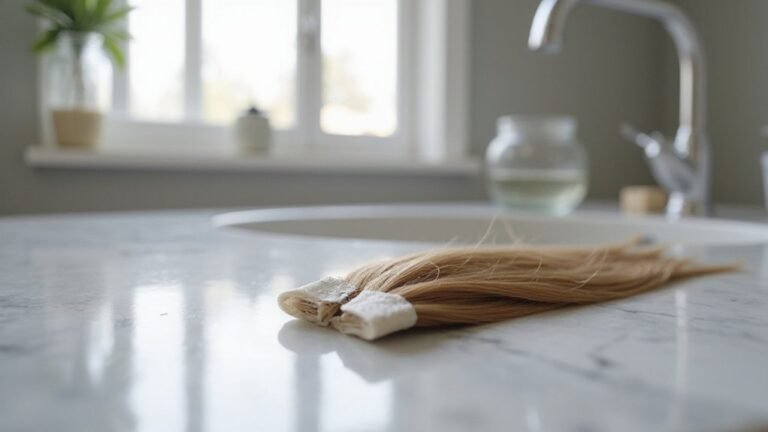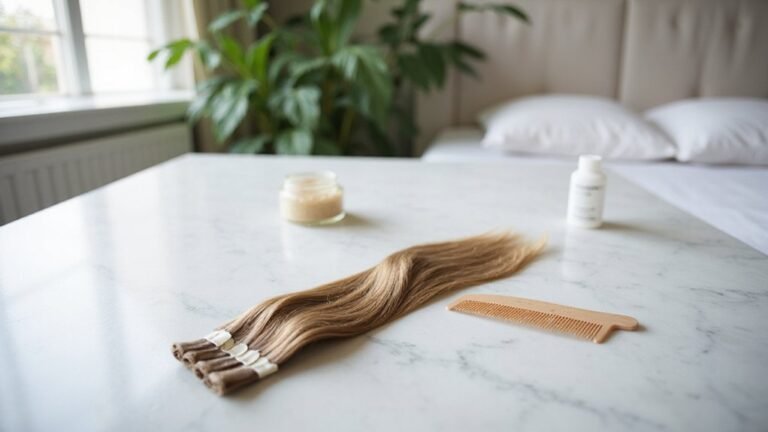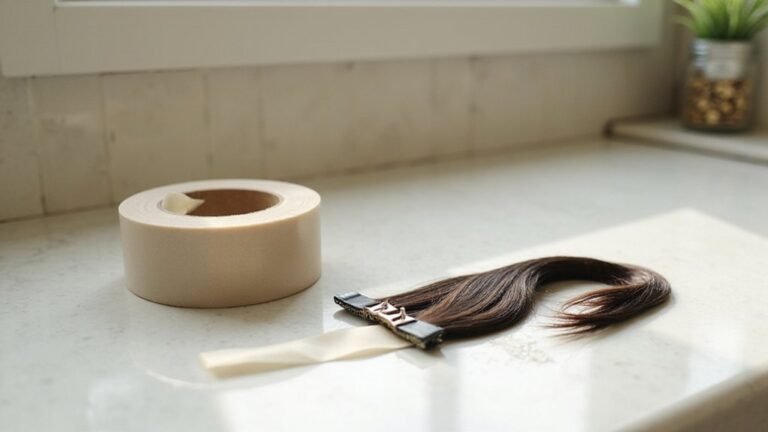
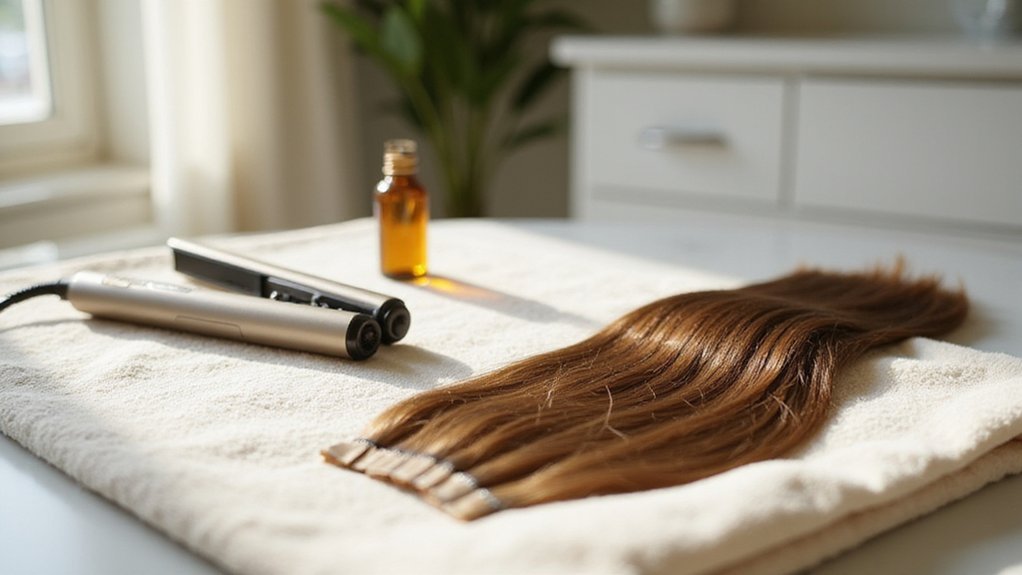
Wondering if you can reuse tape hair extensions? The short answer is yes, but how many times they last depends on factors like hair quality and how carefully you remove them.
Typically, they can be reinstalled two to four times and worn for about six to eight weeks each time.
With proper care, a set can stay looking good for several months.
Keep reading to learn how to get the most out of your extensions.
Which Factors Determine If Tape Hair Extensions Are Reusable?
Your ability to reuse tape hair extensions depends mainly on four factors: the hair quality, the condition of the adhesive, how you remove them, and how well you maintained them during wear. First, focus on the hair itself. Extensions made from 100% Remy human hair with aligned cuticles are more resistant to tangling and can last through multiple uses. Your hair texture also matters—fine or slippery strands may not hold the tape securely, making reapplication more challenging. Color matching is essential; faded or mismatched hair will look unnatural and won’t blend well with your new growth. Lower-grade or heavily processed hair tends to fray and shed easily, decreasing the chances of a second wear. If the condition of the hair deteriorates after initial use, reusing it becomes unlikely. To maximize reusability, always choose high-quality hair from the start and handle your extensions carefully during removal and wear. Just as a derma roller creates micro-channels to stimulate collagen and improve product absorption, maintaining the integrity of the hair cuticles is key to extending the life of your tape-in extensions. For example, learning to properly hold the machine can help you avoid damaging the cuticles during removal and preparation. When selecting your extensions, consider quality and performance ratings to ensure the adhesive and hair construction can withstand multiple applications.
How Many Times Can You Actually Reuse Tape-Ins?
You can typically reuse tape-ins about 2 to 4 times before the hair’s integrity starts to decline. Each installation lasts around 6 to 8 weeks, so over the course of roughly 4 to 6 months, you may have multiple reinstallations. However, it’s important to note that you will always need to use fresh tape tabs for each reapplication, as adhesive longevity does not extend reuse. Some brands claim up to 8 reuses, but this is less common and considered above average. Generally, sticking to 2–4 reuses will give you a more realistic expectation of your tape-ins’ lifespan. You should remove old tape prior to shampooing to prevent sticky residue after cleaning. Following safe removal steps, including the use of an adhesive remover, can help preserve the hair for future reuse. For comparison, using a red light mask may support scalp health during wear periods, but it does not affect tape adhesion. To extend the number of reuses, always store the wefts flat and dry, avoiding any excess heat exposure that can weaken the hair bonds.
How to Remove Tape Extensions Without Damaging Them
To remove tape extensions without damage, start by sectioning your hair at the nape and working upward with a rat-tail comb to expose each tape sandwich. You’ll need a professional removal solution, not just a spray, and apply it directly between the bonded layers until they are saturated. Allow the remover to sit for 10 to 15 minutes to break down the adhesive bond. If resistance remains, add more remover instead of pulling to prevent damage. Gently slide the bottom weft downward while holding the top layer steady. Avoid forceful pulling, as this indicates you need more solution to loosen the bond safely. Handle each weft carefully, and use extra remover to clean off any remaining adhesive bits. Some hair naturally shed and become trapped inside the tape sandwich, which is normal and should not be mistaken for breakage. For best results on reusability, store the removed tapes in a sealed bag with a moisture-free environment to keep the adhesive intact. Properly removing tape extensions in this way helps preserve the tapes intact, making them suitable for retaping later without damage. With careful handling and proper storage, most high-quality tapes can withstand multiple reinstallations, though realistic wear times typically cap out at eight weeks per application before the bond weakens. To further extend the lifespan of both your extensions and scalp, consider adopting a consistent care routine that involves gentle cleansing and avoiding excessive heat near the bonds.
How to Remove Adhesive Residue and Clean Tape-Ins for Reuse
To remove adhesive residue and clean tape-ins for reuse, start by saturating the leftover glue with isopropyl alcohol or a remover formulated specifically for extensions. Let it soak in for a few minutes to soften the adhesive. Gently lift the softened glue with a rat-tail comb, working section by section to prevent hair damage. Avoid scraping aggressively, as this can harm the weft or hair fibers. After removing all the adhesive, wash the extensions thoroughly with a clarifying shampoo to strip away oils and solvents. Follow with a conditioner to restore moisture. Air-dry the wefts completely with the sticky side facing up. Once dry, apply fresh adhesive tabs to the fully degreased wefts for best bonding. Remember, a clean surface is crucial for proper adhesion; any residue or stickiness can compromise how well the extensions hold. Similarly, needle size changes the schedule for how often you perform derma rolling, just as clean wefts determine reusability. Pay attention to proper wig cap preparation to ensure the extension base lies flat for a seamless blend. Finally, perform a thorough comb-through to catch any lingering tackiness before reapplying for reuse. This method ensures the extensions are clean, preserved, and ready for a secure new bond.
When Is It Time to Replace Your Tape-Ins Instead of Reusing?
Weak bonds need replacement. If the tape edges are loose, slipping, or frayed, the adhesive is no longer dependable. Extensions that fall out or shift after re-taping are unsafe to reuse because the bond has deteriorated.
Blend issues also indicate it’s time for a new set. When you notice loss of volume, visible gaps, or a mismatch with your natural hair, the extensions have lost their cosmetic appeal. Additionally, if matting develops near the roots or heavy rows feel uncomfortable, it signals that the set has reached its lifespan.
Generally, it’s best to limit reapplications to two to four times. Beyond that, reusing the tape-ins becomes impractical and less safe, making replacement the logical choice. Just as tattoo ink production relies on precise pigment formulation to ensure safe, lasting results, hair extension reuse must be limited to maintain adhesion and hygiene.
How Many Total Wears Do Reusable Tape-Ins Provide?
You can typically expect to get around 3 to 4 wears from reusable tape-ins, especially when made from premium 100% Remy human hair and cared for properly. Some sources suggest it’s possible to push that to 5 wears with flawless maintenance, but lower-quality options rarely exceed 2 uses. Each retaping cycle gradually reduces the hair’s integrity, so reuse isn’t infinite. Unlike some beauty tools that promise dramatic results with consistent use, the overhyped expectations around tape-in longevity often oversimplify real-world reuse limits. Despite this, you’ll still enjoy the flexibility of multiple styles across installs. Factors like frequent washing and excessive heat styling can significantly shorten how many wears you get from a set. The adhesive bond strength often weakens with each removal, which further limits how many times the same wefts can be securely reapplied.
The total lifespan of your tape-ins generally ranges from 4 to 6 months, or up to a year if you opt for top-tier hair and take excellent care of it. Remember, the number of wears depends heavily on hair quality, your maintenance routine, and how delicately you handle each reinstall. Planning for around 3 to 4 wears per set ensures realistic expectations, knowing that each cycle impacts overall longevity.