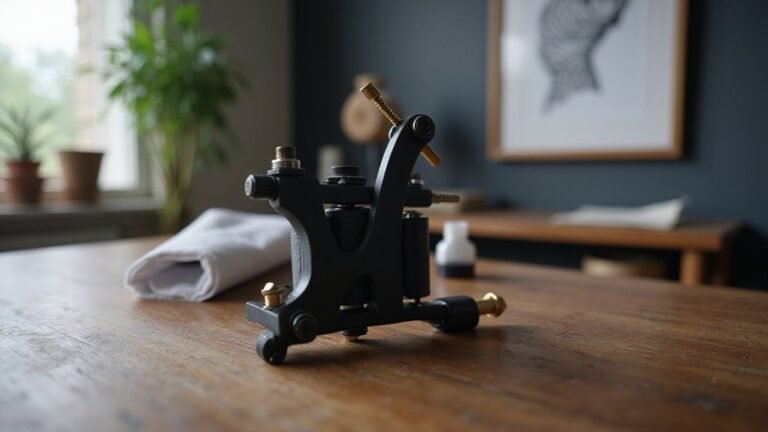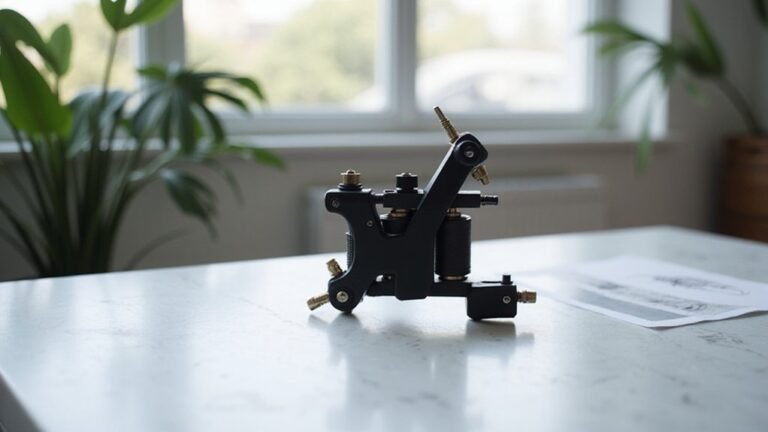
Ever wondered how many needles are on a tattoo gun? The number can range from just one to more than fifty in a single setup.
This choice affects everything from line precision to how quickly your skin gets shaded.
Keep reading to see how different needle counts influence the final look of your tattoo.
What Does “Needle Count” Mean on a Tattoo Gun?
Needle count on a tattoo gun refers to the number of needles grouped together in a single configuration. This count directly impacts your results with tattoo ink quality. A higher needle count, such as 14 or more needles, deposits more ink into the skin with each pass, allowing for faster saturation and more vibrant color buildup. However, it can also increase the risk of blowouts if not handled carefully. Conversely, a lower needle count, like 3 or 5 needles, forces you to work slower, offering greater control for delicate lines and shading. Understanding grouping sizes is essential because the spacing and arrangement of those needles further determines the line or shading effect you achieve. The precise manufacturing process used to create these needle groupings ensures consistent performance and ink flow. Needle configurations are also categorized by their tip shapes, which influence how the ink is deposited and how the skin responds during the session.
It’s important to match the needle count to the skin’s type and condition. A higher count can be aggressive on thin or sensitive skin, causing more trauma and discomfort. Adjusting your needle count based on the area being tattooed helps you achieve cleaner, more precise results while minimizing skin damage.
The Most Common Needle Counts and What They’re Used For
Needle counts typically range from 3 up to 23 or more, with each configuration suited for specific techniques. For precise outline work, 5RL and 7RL liners are common because they deliver sharp, clean lines without excess ink. Shader needles like 9RS and 7MG are ideal for smooth tonal shading, blending colors seamlessly. Larger needle groupings such as 11MG through 15MG magnums are used for filling in larger areas quickly, minimizing passes and reducing skin trauma. Specialty groupings like 23M or 25MG are designed for covering broad backgrounds or creating solid blocks of color. Selecting the right needle count affects not only line weight and shading but also how much pigment you deposit, influencing saturation and overall tattoo quality. The number of needles in a grouping is typically indicated by the number before the needle configuration code such as in 5RL or 9RS. Understanding how a derma roller works can inspire similar precision in tool selection for cosmetic procedures. Just as regular maintenance and proper handling extend the usable lifespan of your tattooing equipment, choosing the right needle grouping for each pass helps reduce overworking the skin and preserves the integrity of your tools over time.

Package: 50pcs mixed tattoo cartridge needles, includes 10pcs each of 1203RL, 1205RL, 1207RL, 1209RL, 1211RL.

Poseidon cartridge adopt a one-time joint design hygienic standard The material is stainless steel and easy to color,and has better ink flow

【50PCS Mixed Tattoo Cartridge Needles Set】Includes 50 individually packaged tattoo cartridge needles in popular configurations: 1203RL, 1205RL, 1207RL tattoo cartridges, 1209RL, 1205RS, 1207RS, 1207M1, 1215M1, 1209RM, 1215RM (5pcs each). Suitable for both lining and shading needles for tattooing.
How Needle Count Affects Line Weight, Shading, and Ink Coverage
Needle count directly controls how many sharps hit the skin simultaneously, making it the key factor in choosing between a fine, crisp line and a bold, heavy one. A single needle, like a 1RL, offers exceptional precision and detail for fine lines. Moving up to 3RL or 7RL increases line thickness noticeably, providing more boldness and coverage for larger areas. Keep in mind that needle gauge also influences coverage: a 12-gauge liner covers more surface area than a 10-gauge, even with the same needle grouping.
For shading, larger groupings such as magnums spread ink more evenly and efficiently across broad surfaces, but they sacrifice some control and precision. Conversely, bugpin or quarter-inch-sized needles allow for tighter control, enabling subtle gradations and blending. Higher needle counts increase ink coverage per pass, speeding up work and reducing the number of passes needed. Smaller needle groupings produce cleaner punctures with less tissue trauma but require steadier control to keep the needles straight and aligned. Larger groupings provide solid saturation and are better suited for straight-line work, though they offer less precision.

Cartridge Needles Sizes: 20 pcs tattoo cartridge needles include 3RL 5RL 5RM 7RM, each size has 5pcs. Those tattoo needles can be used for lining and shading, which can assist you with the entire tattoo work
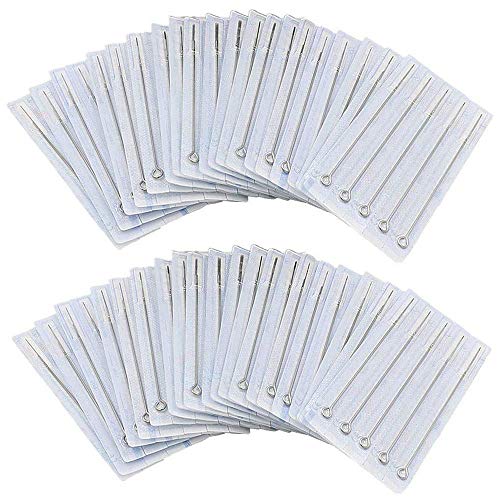

PACKAGE INCLUDING: 50pcs mixed size tattoo cartridge needles set, includes 10pcs each of 1203RL 1205RL 1207RL 1209RL 1211RL; The needle edges are specially designed to catch more ink; Great gifts for tattooists and beginners; Wormhole Tattoo cartridge needles are each needle cartridge is individually packed and sealed, much safer and more convenient;
When Artists Use High Needle Counts (25+ Needles) for Coverage
Using 25 or more needles in a grouping allows you to rapidly pack color across large sections of skin. These wide magnum needle configurations are ideal when you need to fill an entire back panel or create solid blackwork areas efficiently. They are commonly seen in styles like Japanese backgrounds, tribal motifs, or traditional bold designs where speed outweighs intricate detail. Fewer passes with these needle groups enable you to achieve smooth, even coverage quickly, saving time without sacrificing uniformity. Many beginners find using a properly fitted wig cap essential for maintaining hygiene and comfort during long tattoo sessions. Understanding the chemical composition of the ink itself is equally critical, as pigments interact with the skin and needle depth to determine final saturation. However, high needle counts require strict adherence to safety protocols. Each additional needle increases the risk if equipment isn’t properly sterilized or maintained. Always ensure your artist follows rigorous hygiene standards before they load a 25+ needle configuration. The broad coverage is impressive but only safe and effective when paired with meticulous cleanliness and proper handling procedures. For those prioritizing vibrant, long-lasting color in these larger fills, selecting UV-reactive inks that maintain their brightness under blacklight can add a distinctive layer to the final design.
How to Choose the Right Needle Count for Your Tattoo Style
Choosing the right needle count for your tattoo style depends on the work you want to achieve. For fine line work, select a 1RL to 3RL needle grouping, which creates crisp, delicate lines. For traditional outlines with bolder lines, a 7RL or 9RL grouping provides more ink and robustness. When shading, opt for larger counts like curved magnums—these excel at producing smooth gradients and even coverage in black-and-gray tattoos. Needles like the 10 gauge offer a 0.3mm thickness suitable for broader lines, balancing precision with impact. For instance, consistent use of the correct needle grouping can prevent uneven healing, much like how red light therapy masks require regular sessions to show visible improvements in skin tone. Proper aftercare following a tattoo session is also critical to avoid infection, similar to the sterilization methods used when preparing a derma roller for skin needling. For optimal results, you should also consider the recovery time between sessions to allow your skin to heal properly.
Artist preference influences your choice, but always consider the diameter and taper of the needles. A thinner diameter and longer taper facilitate softer ink flow, ideal for detailed work, while thicker diameters and shorter tapers deliver more aggressive puncture and ink deposit. For broad coverage in less detailed areas, larger bundles like 13CM can quickly fill space, whereas a 3RL gives precision in tight, intricate sections. Before starting, always ensure your needles are straight and properly soldered to prevent uneven lines or ink blowouts.

Complete Packaging: 50pcs mixed size tattoo cartridge needles set, includes 5pcs each of 1205RL 1207RL 1209RL 1205RS 1207RS 1209RS 1207RM 1207M1 1215M1 1215RM. The unique design of the needle can store more ink, and the sharp needle thread better completes tattoo activities, suitable for both professional tattoo artists and beginners.
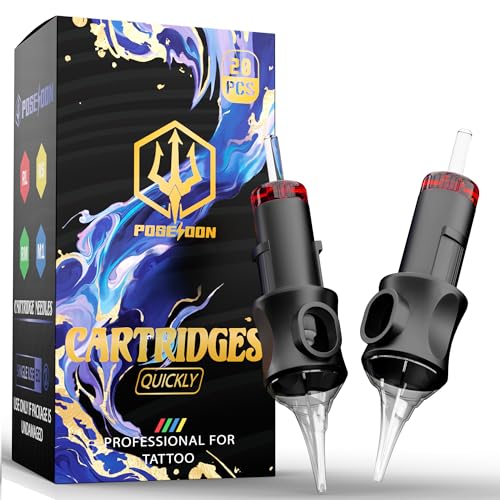
Complete Packaging: 20pcs tattoo cartridge needles set. The unique design of the needle can store more ink, and the sharp needle thread better completes tattoo activities, suitable for both professional tattoo artists and beginners

1.PACKING:Tattoo needles are/individually blister packaged,stamped with sterilization expiration date.