Getting the right needle type can feel overwhelming, especially when you’re aiming for clean lines and smooth shading. Choosing the correct needle is key to achieving your desired tattoo style and quality.
In the sections ahead, you’ll learn which needles work best for different tasks, how to match them to your project, and why using sterile, single-use equipment is a must.
This guide will help you navigate needle options confidently so you can make each tattoo count.
Tattoo Needle Types: Liners, Shaders, and Magnums Explained
There are three main types of tattoo needles: round liners, round shaders, and magnums. Round liners feature needles soldered tightly in a circle, providing excellent stability for crisp, precise outlines. This setup is ideal for detailed linework and small technical elements since it allows for fine control. Needle counts for round liners typically range from 1 to 18, so you can adjust line thickness based on the project’s needs. Understanding the chemical composition of tattoo ink helps explain why certain needle types interact differently with the skin during fine linework. Beginners should practice maintaining a consistent machine voltage and hand speed to achieve clean lines without overworking the skin.
Round shaders share a round shape but have looser needle spacing, which allows more ink flow. They are suited for basic shading and solid color fills, as well as handling thicker lines effectively. Magnums, on the other hand, have a flat, multi-needle configuration. They cover large areas quickly with fewer passes, reducing skin trauma, and are perfect for broad shading and heavy color packing. The pigment base and carrier solution used in the tattoo ink making process directly affect how each needle type lays down color and heals on the skin.
Each needle type serves a specific purpose, and experienced artists often combine them during a single tattoo to achieve different effects and textures. Understanding their differences helps you choose the right needles for the desired outcome.

Package: 50pcs mixed tattoo cartridge needles, includes 10pcs each of 1203RL, 1205RL, 1207RL, 1209RL, 1211RL.
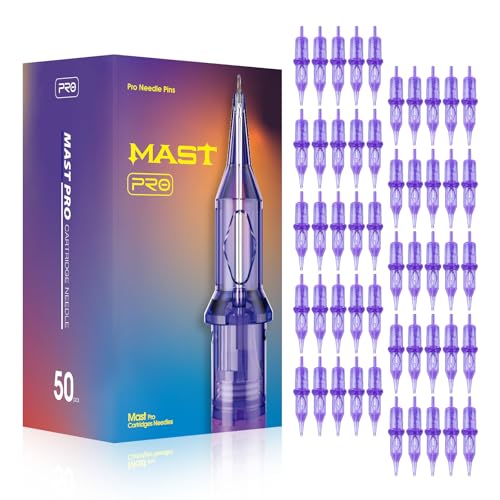
Mast Pro purple tattoo cartridges needles have been providing with high density clear plastic body.

Poseidon cartridge adopt a one-time joint design hygienic standard The material is stainless steel and easy to color,and has better ink flow
Round Liners vs. Round Shaders: What’s the Real Difference?
Round liners and shaders are distinguished primarily by needle groupings. Round liners have a tightly packed circle of needles, often with about 3 to 5 needles arranged very close together. This dense grouping allows you to create fine, precise lines, making it ideal for sharp outlines and delicate details. The tight grouping provides pinpoint accuracy and thin lines, perfect for detailed work. This precise geometry influences how the skin responds to the puncture, similar to the way controlled micro-injuries stimulate collagen production. The total needle count in a liner can vary, but the compact arrangement remains the defining factor for its precision. Artists often prefer round liners for fine-line tattoos due to their unmatched accuracy and consistency.
In contrast, round shaders feature looser needle groupings, typically with 5 to 9 needles spread more evenly apart. This wider spacing lets more ink flow through each shot, resulting in thicker, bolder lines. Round shaders are better suited for shading larger areas and creating solid fills where you want a more prominent edge, though they sacrifice the fine-line precision of round liners. The key difference boils down to how tightly the needles are grouped—this directly affects the line weight and ink distribution, guiding you to choose the right tool based on the precision or boldness you need. Shaders are more forgiving of wobbling than liners due to their looser configuration, making them ideal for artists who prefer a safety net against minor hand shakiness. This looser spread also increases the ink flow rate per pass, allowing for faster coverage of larger surface areas.
When to Use a Magnum Tattoo Needle for Large Fills
Use a magnum needle for large color blocks or broad shaded areas. Its wide grouping provides dense ink coverage quickly, reducing the number of passes needed and saving session time. This makes it ideal for solid fills in traditional, Japanese, or bold styles where saturation is essential. Magnet needles excel in creating smooth gradients in realistic portraits since they build broad tonal work with ease. For intricate large designs with tight spaces, consider using a smaller magnum to maintain coverage without sacrificing control. Always check for bent tines before each use to avoid uneven lines, and use alternative shading techniques like whip shading to add texture when desired. Proper needle maintenance and choosing the right magnum size help you achieve efficient, consistent results. Understanding the differences between machine types] can also guide your needle selection for optimal performance. Different needle counts further determine the magnum’s coverage and ink flow for specific tasks. When selecting a curved mag, remember that the M1 configuration is less traumatic for the skin and beginner-friendly, while the M2 packs ink faster with greater trauma.

Complete Packaging: 50pcs mixed size tattoo cartridge needles set, includes 5pcs each of 1205RL 1207RL 1209RL 1205RS 1207RS 1209RS 1207RM 1207M1 1215M1 1215RM. The unique design of the needle can store more ink, and the sharp needle thread better completes tattoo activities, suitable for both professional tattoo artists and beginners.

[Package]: 50pcs Assorted tattoo cartridge needles, includes 10pcs each of 1207RM, 1209RM, 1211RM, 1213RM, 1215RM.

50 pcs Mix Assorted Transparent Tattoo Needle Cartridges - Includes are a mix of #12 Standard RM needles.
Why Curved Magnum Tattoo Needles Create Smooth Shading
Curved magnum needles create smooth shading because their arched center allows the outer edges to meet the skin more evenly. This configuration eliminates the abrupt stops and starts you might experience with flat magnum needles. As a result, they excel at color blending, with the curved edge spreading pigment uniformly rather than depositing it in harsh, banded lines. They also cause less trauma to the skin, reducing damage during multiple passes required for seamless gradients. This gentler action helps preserve skin texture and allows you to build color gradually through light, controlled layers. Beginners should always verify their machine setup before starting a session, as proper needle depth and voltage are critical to achieving the desired smooth effect. When using curved magnums, the common technique involves gentle pendulum motions at a shallow angle. Proper skin stretching and medium taper needles further enhance control and produce airbrush-like color blending, especially in black-and-grey or realism work. Beginners should prioritize a comfortable wig cap for practice sessions to focus fully on needle technique without discomfort.

【Anti-Spitback Membrane Design】Features a built-in reinforced membrane system that effectively prevents ink spitback for a cleaner workspace. The innovative internal structure ensures maximum needle stability and guidance during lining, offering ultra-precise control.
Mast Pro purple tattoo cartridges needles have been providing with high density clear plastic body.

BIGWASP tattoo needle cartridges (Generation 3)
Flat Tattoo Needles: Your Tool for Bold Lines and Solid Packing
The flat tattoo needle is ideal for creating bold lines and solid fills. Its straight row of points allows for dense ink deposits with each pass. Unlike curved or round needles, a flat configuration delivers consistent saturation and clean edges efficiently. This makes it especially useful in traditional tattoo styles, geometric patterns, mandalas, and areas requiring sharp, precise color fills. For those seeking efficient application of dense pigment, similar principles apply to certain skincare devices, as red light masks deliver concentrated energy to targeted areas for optimal results. Just as consistent pressure and angle are vital for tattoo saturation, proper positioning prevents damage from hair extension adhesives. Similarly, reusing tape hair extensions requires careful attention to adhesive residue and cleanliness.
Because the needle’s points sit in a straight line, you need to maintain careful control during use. Move it in straight passes rather than circular motions to ensure even ink distribution across all points. The flat needle is less forgiving for soft blends or shading, but it excels at tightly filling small spaces and defining line work. Its design results in faster pigment packing and clearer, more distinct lines, making it a reliable choice when your goal is maximum saturation and crisp detail. When using flat needles for these solid fills, overlap strokes by about two-thirds to enhance saturation and blending.

Disposable Blackout Tattoo Tube and Grip Sets 49 Flat Grips size 1.25" Single use Gas Sterilized Perfect for heavy blackwork and blackout tattoos
Mast Pro purple tattoo cartridges needles have been providing with high density clear plastic body

JimKing Tattoo needles and tips are packaged in a disposable sterilization box to prevent secondary infections.
Tattoo Needle Gauge and Size: Match It to Your Project
Needle gauge refers to the thickness of the needle, which directly impacts ink flow and line fineness. Common gauges include #8 (0.25 mm), #10 (0.30 mm), and #12 (0.35 mm). Lower gauges, like #8, are finer and produce thinner lines with less ink flow, ideal for detailed work. Higher gauges, such as #12, are thicker and allow more ink passage, making them suitable for bold outlines and solid fills. For heavier coverage, you might even use #14 (0.40 mm) needles. Matching the needle gauge to your project ensures precision—use #8 for delicate details, #10 for versatile shading and lines, and #12 or larger for bold, solid areas. Gauge selection also directly influences the degree of precision and the overall impact on the skin. Unlike white ink, which fades faster due to pigment opacity, needle gauge selection for dark ink prioritizes saturation over visibility concerns. Expert tips emphasize that proper needle depth is equally critical to avoid blowouts or scarring. For clients concerned about discomfort, needle grouping configurations can also affect how evenly pressure is distributed across the skin.
Advanced Tattoo Needle Features: Bugpins, Taper, and Texture
Once you’ve matched needle gauge to your project, you can enhance your results by exploring advanced features like bugpins, taper, and texture. Bugpins, with their thinner #10 or #08 diameter, restrict ink flow, allowing for finer detail and smoother gradients—ideal for realism work. However, they are slower at packing large areas with color, so skip them when heavy saturation is necessary. Similar to how a derma roller requires careful preparation and aftercare to avoid skin damage, tattoo needles demand precise technique to prevent trauma. For those with long hair, securing strands with a wig cap can help maintain a clean, sterile workspace during tattooing. Understanding the differences between rotary and coil machines can also guide your needle choice, as each machine type affects ink flow and precision differently.
Needle taper influences line behavior significantly. Short tapers produce bold, aggressive lines suitable for outlining or color packing but can cause more trauma to the skin. Long tapers deliver softer, more gradual ink flow, creating smooth shading transitions that are perfect for subtle blending.
Tattoo texture depends on your needle setup. Bugpins create tighter, finer marks for delicate gradients and precision work. In contrast, standard needles pack ink more aggressively, making them better suited for bold fills. Choosing bugpins will give you crisper, cleaner lines, but keep in mind that imperfections may be more noticeable. To prevent overworking the skin and causing damage, pair lower voltage settings with bugpins.
Traditional Tattoo Needles vs. Cartridges: Which Format Wins?
Cartridges are generally considered superior for speed and safety in modern tattooing. They snap into place quickly, allowing you to switch needles instantly, which reduces downtime during sessions. Because cartridges keep their tips retracted until activated, they lower the risk of cross-contamination and accidental needle sticks. This makes them especially appealing for fast-paced environments or when working with clients concerned about cleanliness. This approach parallels derma roller safety practices, where sealed, sterile needle heads minimize infection risks for skin treatments.
Traditional tattoo needles require manual assembly and adjustment of the setup, which can slow down your workflow. They also expose their tips during use, demanding strict sterilization procedures to prevent infection. While they offer more mechanical feedback and tend to cost less over time, they can be less convenient for frequent needle changes.
Compatibility also influences your choice: cartridges work well with rotary or pen-style machines, making them versatile and ergonomic, reducing grip strain during long sessions. However, coil machines typically favor traditional bars, which they are designed for. Ultimately, if speed, safety, and ease of changing needles are your priorities, cartridges often come out ahead. If cost control and mechanical feedback matter more, traditional needles might better suit your style.
Mast Pro purple tattoo cartridges needles have been providing with high density clear plastic body.

【50PCS Mixed Tattoo Cartridge Needles Set】Includes 50 individually packaged tattoo cartridge needles in popular configurations: 1203RL, 1205RL, 1207RL tattoo cartridges, 1209RL, 1205RS, 1207RS, 1207M1, 1215M1, 1209RM, 1215RM (5pcs each). Suitable for both lining and shading needles for tattooing.

Cartridge Needles Sizes: 20 pcs tattoo cartridge needles include 3RL 5RL 5RM 7RM, each size has 5pcs. Those tattoo needles can be used for lining and shading, which can assist you with the entire tattoo work
How to Pair Tattoo Needle Types With Lining, Shading, or Color
For lining, use tight round liner needles. These hold less ink flow, allowing you to create crisp, controlled edges perfect for script and geometric designs. If you want bold outlines, flat shaders are ideal because they deliver more ink per stroke, darkening lines in just one pass.
When shading or packing color, switch to magnum needles. Curved magnums help achieve smooth color blending with gentle transitions, while stacked magnums are better for dense saturation across larger areas. For tight corners near existing lines, round shader needles are versatile—they work well for small fills and mixed line-work.
Always match your needle calibration to the effect you want. Smaller diameter needles with longer tapers are better for fine details. Larger needles or those with shorter tapers provide bolder saturation and faster coverage. Your choice should balance the need for precision, speed, and coverage based on the task at hand. For instance, a 12 gauge round liner offers good skin grip and steady lines, facilitating versatile tattooing with easier skin penetration.
Top Beginner Mistakes When Choosing Tattoo Needles (And Fixes)
Choosing the right needle size is essential. For beginners, starting with sizes like 5RL or 7RL is ideal because they are easier to control. Smaller groupings like 3RL can be hard to manage and may push too deep into the skin, risking blowouts or uneven lines. Larger sizes provide more stability and reduce the chance of skin trauma as you learn. Always match the needle to the task—use liners for fine lines and shading needles for larger areas. Improper needle choice is a common mistake that leads to poor results and skin damage.
Sterilization is critical for safe tattooing. Never reuse disposable cartridges or use non-sterile needles from unknown sources. Always select sterile, single-use needles from reputable suppliers to prevent infections.
Before starting on a client, test the needle fit and depth on a practice surface or a piece of fake skin. Stick to a small, basic starter set—perhaps 5RL, 7RL, 9RL, and curved mags—until you develop better control. This approach helps prevent blowouts, reduces skin trauma, and builds consistent hand control over time.