Worried about your tattoo peeling or ink coming off? It’s a common part of the healing process and usually not a sign of trouble. The flaky, dull-looking layers you see are just dead skin shedding, not the ink itself.
Understanding what’s normal can help you care for your tattoo properly and spot any issues early. Keep reading for the full details.
Is It Normal for Tattoo Peeling to Look Like Ink?
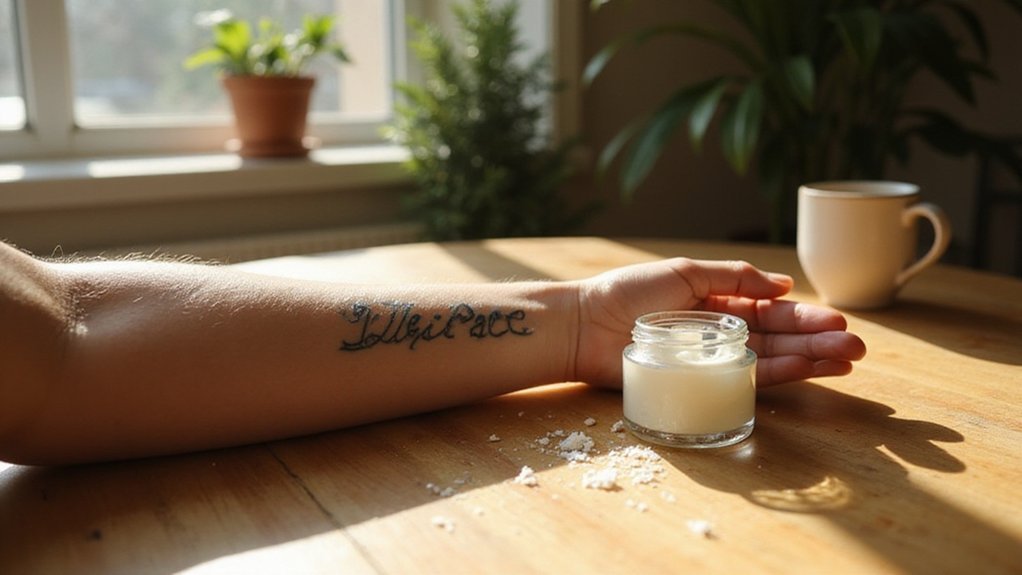
Peeling skin during tattoo healing is not ink coming off. Instead, what you’re seeing are dead skin cells shedding, often with a faint trace of color. Because tattoo pigment resides deep in the dermis layer, it remains securely in place beneath the surface. The flakes you notice are stained surface cells, lifting away as part of normal exfoliation. They might appear lightly tinted, grayish, or translucent, but this isn’t ink loss. The manufacturing process of tattoo ink uses sterile techniques to stabilize pigment particles, ensuring they stay suspended and ready for deep deposition. Damage that affects the deeper layers—like picking at scabs or insufficient needle depth—is what can lead to actual ink removal. Usually, the dull or cloudy look during peeling is temporary as fresh skin develops. Rest assured, these stained flakes are just dead skin being replaced, a healthy sign during healing. This natural shedding process is similar to how microneedling stimulates collagen by creating controlled micro-injuries that prompt skin renewal, though tattoo healing relies on the pigment sitting safely below the epidermis. Proper needle depth during tattooing ensures the pigment is deposited into the dermis, preventing the ink from being shed along with the epidermis.
What Does Normal Tattoo Peeling Look Like Day by Day?
Normal tattoo peeling typically occurs between days 3 and 10. During this period, you will notice specific changes each day. Between days 3 and 5, thin, translucent flakes start to appear, indicating the beginning of peeling. Skin dryness also becomes noticeable at this stage, but significant peeling hasn’t yet begun. From days 5 to 7, active flaking becomes more widespread, and your tattoo appears drier with observable color fading as dead skin covers the ink. Between days 7 and 10, peak peeling occurs, and you’ll see a patchy surface with fine flakes washing away. This is when color fading is most prominent, but it’s only temporary. From days 10 to 14, the peeling phase tapers off, and most flakes are gone. You may still feel slight tightness, and the skin begins to heal, allowing the tattoo’s color to gradually return.
Why Your Skin Looks Dark or Colored During Peeling
When your tattoo is peeling, it’s common for the skin to appear darker or oddly colored temporarily. This color change occurs because a cloudy, milky layer forms over the new epidermis, which filters the ink and makes it seem more opaque or dull. This phase is only temporary. Additionally, peeling skin often appears dry and rough, which scatters light and dulls the tattoo’s appearance. Dead skin flakes cling to the surface, further altering how the ink reflects color. This isn’t fading; it’s part of the healing process. To help the true vibrancy reappear, keep the area well moisturized to reduce dryness and support healthy skin regeneration.

FRAGRANCE FREE TATTOO AFTERCARE FOR SENSITIVE SKIN - The same #1 artist recommended Hustle Butter formula, now with no added fragrance, dyes, or parabens. The unscented tattoo lotion of choice for sensitive or easily irritated skin.

TATTOO AFTERCARE ESSENTIAL: Hustle Butter is the original tattoo aftercare balm for new and older tattoos. With over 10 years in the market, we are a pioneer of the tattoo aftercare category.

TATTOO AFTERCARE ESSENTIAL: Hustle Butter is the original tattoo aftercare balm for new and older tattoos. With over 10 years in the market, we are a pioneer of the tattoo aftercare category.
Signs Your Tattoo Healing Isn’t Going Right
Persistent redness or heat extending beyond five days, especially if spreading, indicates an abnormal healing process. Look out for swelling that doesn’t decrease over time, as well as oozing yellow or green discharge or a foul smell, which are signs of infection. Severe itching accompanied by hives, bumps, or rash could suggest an allergic reaction; if inflammation damages the pigment, it might cause tattoo fading or ink migration. Pay attention if your pain worsens rather than lessens, or if you develop fever, chills, or red streaks radiating from the tattoo area. These symptoms are serious and suggest infection or poor healing rather than normal peeling. If you notice any of these signs, contact your tattoo artist or healthcare provider promptly for evaluation and proper care. Excessive heat from the tattooed skin that persists beyond the initial day signals possible infection and warrants immediate medical consultation to prevent the spread of complications.

POWERFUL, EFFECTIVE PROTECTION & HEALING: Terrasil is formulated to support skin repair and healing with antibacterial properties and protect damaged skin from infection. Ideal for all skin types in adults and kids. Most customers experience noticeable relief in 2-3 days depending on the severity of the skin condition. Gentle enough for sensitive skin on both adults and kids.

POWERFUL, EFFECTIVE PROTECTION & HEALING: Terrasil Wound Care is uniquely formulated to provide a powerful barrier against infection, killing 99.99% of bacteria. Soothing formula covers and protects damaged skin and supports fast healing of wounds, ulcers, bedsores and pressure sores. Most customers experience noticeable relief in 2-3 days depending on the severity of the skin condition. Gentle enough for sensitive skin on both adults and kids.

FROM THE LEADER IN TATTOO AFTERCARE: For years now, Mad Rabbit has consistently ranked among the most popular and highest-rated tattoo products on the market. We’ve created a top-of-the-line Tattoo Glide to help professional tattoo artists do their best work.
When Peeling Means You’re Actually Losing Ink
Actual ink loss shows as patchy blank spots or missing sections after healing, not colored flakes during peeling. When you pick flakes off too early, you pull the pigment out with healing skin, leading to these blank areas. During peeling, what you see are often just surface flakes of dead skin, not true ink loss. Judging your tattoo’s condition too soon can be misleading, so wait until it’s fully healed to assess any ink loss. If you see flakes during peeling, don’t mistake them for fading—true ink loss shows up later as uneven patches once healing is complete. Using a derma roller with sterile, single-use needles prevents introducing bacteria that can disrupt proper healing. Creating a proper tattoo stencil before application reduces the risk of poor placement and subsequent healing issues. The peeling and shedding that occur are a normal part of healing. For safe removal of any adhesive during the healing process, the safely removing tape method ensures your skin and ink remain undisturbed.

✅ REVITALIZE HAIR AND SCALP HEALTH: Transform your hair care routine with the FolliRoll derma roller, designed to support the appearance of thicker hair and promote scalp wellness with 192 authentic needles for precision. Includes scalp needle roller for hair and derma roller for scalp care.

ULTRA-WIDE ROLLER DESIGN: Cover more area with less effort using the large, ultra-wide derma roller for face, scalp and body. Unlike generic rollers that require multiple strokes, this roller ensures smoother results with a single stroke, making it the ideal device for scalp hair and the perfect micro needling roller for face and skin care.

For Home Use Only - Easy and Convenient to Use
How to Tell If You’re Peeling Skin or Damaging the Design
Peeling skin during tattoo healing is normal when it appears as thin, dry flakes that are white, gray, or translucent. You won’t experience pain, only mild itchiness. The tattoo design underneath should remain visible and undamaged. However, if flakes are pulled away and reveal patchy areas, or if thick scabs, pus, or a foul odor develop, these are signs of damage rather than normal peeling. Such issues indicate you may be removing ink or causing skin infections. Understanding how tattoo ink pigments are suspended in a carrier solution helps clarify why deeper layers stay stable while surface cells shed.
To protect your tattoo, proper aftercare and skin hydration are essential. Avoid the temptation to pick or over-moisturize during peeling. Keep the area clean and use a light, fragrance-free moisturizer. Watch for signs like redness, swelling, or skin that feels hot or painful, which suggest abnormal healing and require professional consultation. Trust that the ink is deposited below the surface layer of skin, so as long as you’re gentle and attentive, your design should stay intact beneath those loose flakes. Similar to caring for tape hair extensions, keeping the surface clean and avoiding manipulation prevents damage to what lies beneath. While normal peeling is harmless, chronic skin irritation from repeated tattooing has been studied for potential long-term health effects linked to pigment composition.
Patchy Ink After Peeling: What to Do Next
Keep it clean: wash gently with a mild, fragrance-free soap and apply a thin layer of moisturizer. Avoid picking, scratching, or rubbing the area, as mechanical trauma can make the patchiness worse. Let flakes fall off naturally instead of pulling at them. Don’t judge how it looks until the healing is complete. If large gaps remain after healing, contact your artist for a touch-up assessment. The immune response causes natural shedding of flaky skin, and this flaky skin may contain ink that appears to be coming off but is actually only in the epidermis. To support healthy skin recovery during this phase, avoid introducing any additional skin irritation risks from unverified devices or treatments. Just as tension on hair follicles from certain cosmetic attachments can compromise skin integrity, picking at peeling tattoo skin can worsen patchy ink and delay healing. This careful approach parallels how proper adhesive application ensures the lace front stays secure without damaging the scalp.

16-fluid ounce bottle of Lubriderm Fragrance Free Daily Moisture Lotion + Pro-Ceramide, Shea Butter and Glycerin to help restore skin's moisture barrier for healthier-looking skin

FRAGRANCE FREE TATTOO AFTERCARE FOR SENSITIVE SKIN - The same #1 artist recommended Hustle Butter formula, now with no added fragrance, dyes, or parabens. The unscented tattoo lotion of choice for sensitive or easily irritated skin.

Protect Your Body Art: Moisturizing with the bonus of itch relief! Tattoo Goo's Tattoo Care Lotion soothes healing skin & keeps healed ink looking sharp for life. With olive oil & glycerin, it delivers deep, breathable hydration that won’t clog pores
How Long Does the Peeling Stage Last?
The peeling stage typically lasts between 1 and 2 weeks. You will usually notice peeling starting around days 3 to 7 after getting your tattoo. Smaller tattoos tend to peel earlier, often within a few days, while larger pieces may take up to 10 days to begin peeling. It’s normal to see flakes and color variation in the peeling skin; this is the pigment shedding, not ink loss. Proper aftercare helps ensure smoother healing and reduces the risk of complications. If peeling persists beyond two weeks, you may be more prone to scarring from prolonged irritation. Just as with tape hair extensions, consistent aftercare is essential to prevent lifting or damage during the healing process. Keep in mind that surface flaking can stop before the tattoo is fully healed underneath, which can take 3 to 4 weeks. Watch for redness that worsens or spreading irritation, as these signs indicate unusual healing and should be evaluated by a professional. Patience is key—your tattoo’s color and texture will settle once this peeling phase is complete.
Why Your Tattoo Looks Dull After Peeling (And When It Recovers)
As your peeling stage ends and the flaky skin falls away, you might notice your tattoo looking dull, cloudy, or even ashy. This appearance is normal because the new epidermis is less transparent, and dead skin cells sit on top of the pigment, muting the color. Rest assured, the ink remains safely in your dermis, so there’s no need to panic. The milky or silver skin look fades as the outer layer fully renews itself. Color begins to return once peeling stops, with ongoing sharpening over the next few weeks. Keeping your skin hydrated helps reduce the muted, ashy look and makes the tattoo appear clearer. Much like a wig cap provides a smooth base to protect hair layers, allowing the new skin to settle without disruption aids color recovery. Since pigment particle size affects how light scatters beneath the surface, finer particles reflect color more consistently as the skin regenerates. Avoid judging your tattoo at its most faded stage—its final vibrancy will emerge as the dermis rebuilds completely. Continue to moisturize and be patient; time is the key to restoring its true brightness. The depth at which needle groupings deposit ink directly influences how evenly the pigment sits, which affects how uniformly the new skin reflects light during healing.

TATTOO AFTERCARE LOTION: After Inked Tattoo Lotion brings hydration and nourishment to your tattooed skin. Formulated with grape seed oil, which helps maintain vibrant ink colors while pacifying the skin and promoting moisture retention.

☑Natural Safe Organic Ingredients: Tattoo Aftercare Butter is composed of Shea Butter, Jojoba, Macadamia Ternifolia Seed Oil and Vitamin E Complex. Our all-natural butter is also petroleum-free and paraben-free. After use, it can make the tattooed skin heal faster and moisturize the skin. Makes your skin smooth and the tattoo color bright.

Tattoo Aftercare Lotion with Rapid Absorption: Our tattoo lotion aftercare is specifically formulated for quick absorption, promoting non-greasy application while aiding swift tattoo healing. This advanced formula ensures your skin receives optimal care during the critical post-tattoo period.